By Penelope Sofias
This week I decided to look into two platforms and the policies they have set in place that address and combat the spread of misinformation. I chose Instagram, my most used form of social media, and Reddit, a platform I use on occasion but am not as familiar with. With my experience on Instagram, I have observed how the app curbs misinformation and harmful content through post warnings and privacy policy updates. While I use Reddit, it is usually for the occasional niche question and I haven’t noticed much information on the platform’s policies. This week, I am diving in to understand more on how misinformation can be curbed by these prominent platforms.
Instagram:
Instagram has swiftly become one of the most popular social media platforms in the digital world. It has become a hub for a variety of different communities, connecting people with friends, family, and strangers through visuals. Whether through posts, stories, and now threads, Instagram is a source for spreading a spectrum of information.
Instagram is owned by Meta. By looking into Meta’s approach to handling misinformation, I found a feature exclusively in The United States that was released earlier this year called Community Notes. This is a program that is open to the public based on a variety of qualifying factors. The goal of Community Notes is to add context to a post. If the post holds a strong claim that is not necessarily false, but is not backed up by evidence, users can draft up a note that must include credible sources. When multiple users contribute notes to a single post, these notes are then highlighted to the public. This is a community based way intended to provide background information and contextualize original posts so Instagram users can make informed decisions.
Outside of The United States, Meta utilizes third party fact checkers through the non-partisan International Fact-Checking Network to ensure that misinformation is labeled appropriately and action is taken. By labeling flagged posts in different categories like “False, Altered, or Partly False” Instagram then takes action in different forms of severity. Algorithm technology is utilized to suppress posts that have been flagged. If a post fully violates guidelines like a post producing hate speech or using a false identity, the account and its content will be fully removed. If a post does not fully breach Meta’s policies but has still been flagged, technology is used to minimize the number of people that come in contact with it. Meta also utilizes “visual labels” to notify Instagram users if a post contains sponsored information, graphic or harmful content, and now even AI generated
Example of Instagram’s “Visual Warnings”:
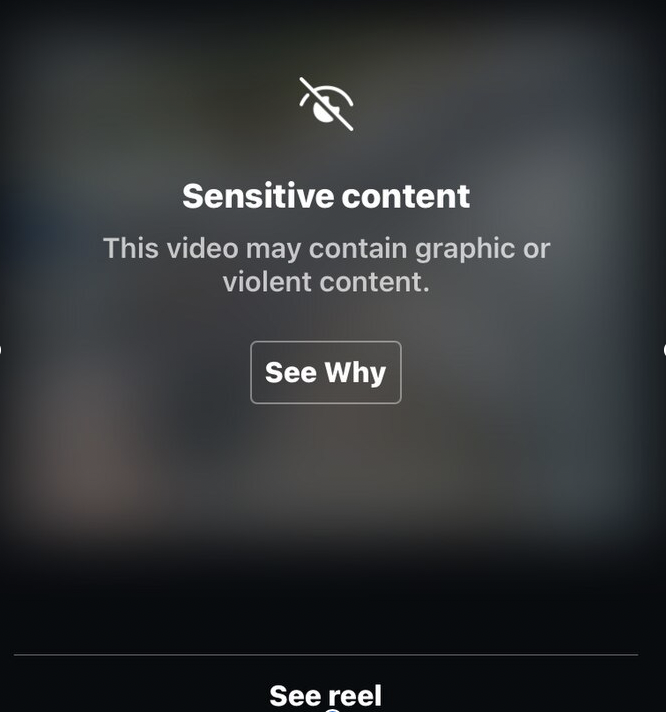
While it was enlightening to learn of the numerous fact checking features that Instagram and Meta incorporate into their platforms and action plans, I also can see how this is not enough to truly sift through misinformation. As we have learned, misinformation is spread when it is eye catching and emotionally charged, utilizing clickbait techniques. It is also spread by encouraging and taking advantage of like minded thoughts and opinions. While having fact checking available to the public and verified third parties is certainly helpful, I feel as though Instagram could do more. While using algorithm technology to reduce misinformation is great, algorithms can also be harmful in creating echo chambers of information, whether true or false. This Washington Post article highlights Instagram’s “limit even more” setting which allows users to adjust their personalized content in the app’s individual settings. However, users have also expressed how this setting doesn’t treat all content equally. It also raises the question of why users must go through so many hurdles to avoid harmful content. As I become more media literate, I feel like I am more capable of sifting through misinformation on Instagram. I appreciate the visual labels that warn users about graphic content but I have even noticed how that warning in itself can be seen loosely as “clickbait”. When I see warnings like that, I become even more curious about what is about to be shown to me and not as aware of the fact that it can be misinformation. Instagram certainly has room for improvement, especially through the use of algorithms that suppress certain information but push other content.
Reddit:
Reddit is a forum based platform which allows users to connect over and discuss incredibly niche topics. While I wouldn’t consider myself an active user, I certainly find Reddit to be a great source of information when it comes to random questions and when I need specific insight. However, because it is such a public forum, I was curious to see how a space with so many people talking about specific topics handles misinformation.
Looking into Reddit’s approach to content moderation, I discovered that they monitor misinformation through volunteer Moderators or “Mods”. While all Reddit users must follow Reddit’s rules and guidelines, a large portion of surveillance is done by the users themselves, the individuals who create their own community based “subreddits”.
Similar to how Instagram puts into action algorithms and tech, Reddit utilizes technology based systems to ensure that content posted on the platform is in line with both subreddit creators and Reddit’s own policies. These are in the form of automated tooling like “AutoMod”, a system that is tailored by creators and manages their content and specific rules.
This Reddit diagram shows the information removed by Reddit, Mods, and Admin:
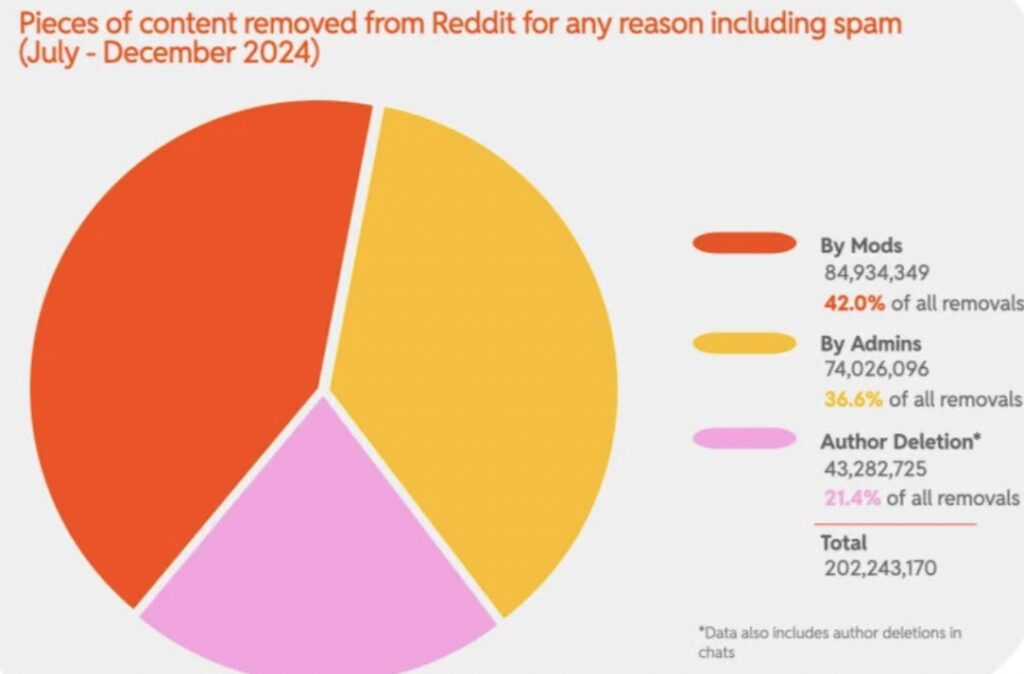
While Reddit is a great medium for exchanging ideas and views in a community based way, there are certainly drawbacks to this kind of platform. Unlike the massive platforms run by Meta, Reddit does not necessarily have a fact checking system set in place. This NPR article interviews Lulu Garcia-Navarro, a volunteer Reddit Moderator and how she navigates misinformation in a community forum setting. Unfortunately, I have gathered that just like this interview said, Reddit is a primarily “self-regulated” platform. Yes, users have to follow guidelines and can’t outright post harmful content and language, but there doesn’t seem to be a strict system that sifts through misinformation and encourages users to have educated judgment when it comes to coming across new information. While Instagram is by no means perfect, I could see how using a similar institution of third party fact checkers could help Reddit become a more reliable platform.
Conclusion:
Both Instagram and Reddit are unique in the way that information is distributed, however, there is no doubt that even with policies set in place, these platforms no doubt have misinformation spread among users. It’s interesting to see how there is a fine line between allowing free speech but maintaining a trustworthy and safe environment for users. I am not entirely sure how to move the needle on misinformation for the better, however it is clear that there needs to be a balance between using technology and AI along with real human based fact checkers. From looking through the way these platforms curb misinformation it is also evident that media literacy is a necessity when navigating social media.