Algorithms In The Modern World:
“Algorithmic curation will tend to amplify trends toward information homogeneity at the level of the individual”
Algorithms are technological tools that collect trends in user data in order to predict what a viewer engages with. Almost everyone utilizes social media, as a result, the average person is constantly participating in algorithms. They are what curate what you see online every single day. While they can be handy, helping you find new artists in your favorite music genre or showing you memes that are sure to make you laugh, they can also be harmful by enhancing biased views and encouraging the spread of misinformation and falsehoods. What is recommended is what you already enjoy or believe, not what is true or verified.
Almost any platform you open utilizes algorithms to produce specially curated content just for you. From Instagram’s “Explore Page” and TikTok’s “For You Page”, to even news outlets like The New York Times asking you to choose topics of interest when you first subscribe, algorithms dictate what you will and won’t see.
My Instagram “Explore Page” and The New York Time’s “You” Page:
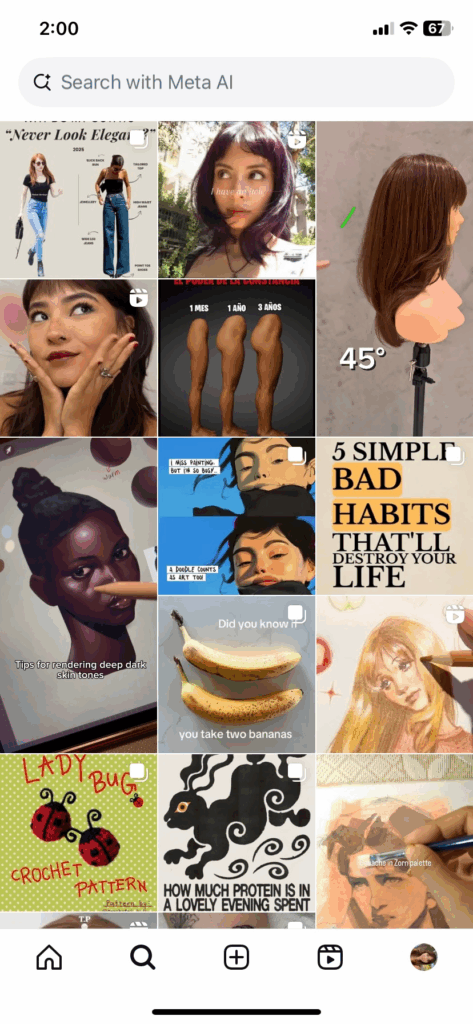
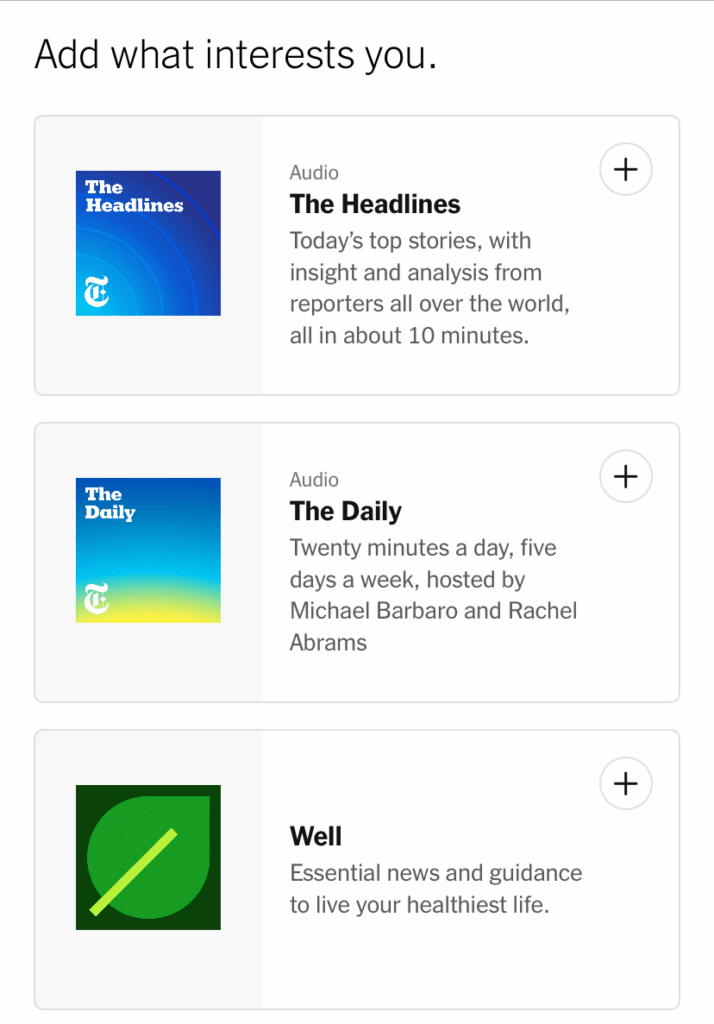
What started as an innocent way for users to see the material that will receive a like, a comment, or a share has now created a warped perception of what the digital world contains. This form of confirmation bias can also be taken advantage of by users to promote their own ideologies. What is created is what will get engagement from their target audience and feed into their already specified niche.
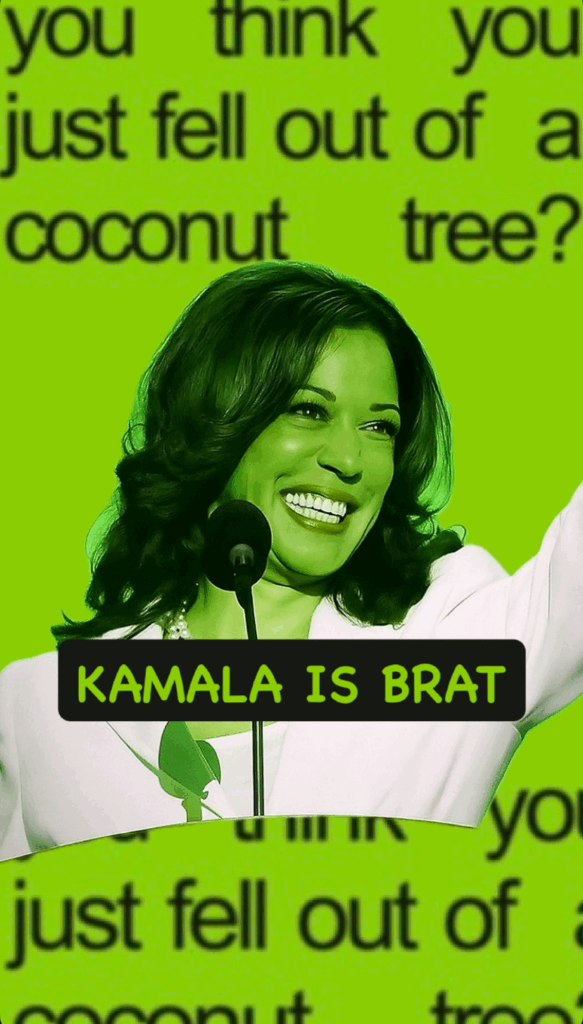
Looking back at the most recent U.S. Presidential election, Democratic candidate Kamala Harris is the perfect example of how users can take advantage of trends and algorithms to create engagement. While Harris did not necessarily promote misinformation, hopping on trends like Charli XCX’s “Brat” reinforced the filter bubbles of younger online audiences. The Washington Post discusses how algorithms play a role in politics with “liberal and conservative users seeing and interacting with vastly different news sources”. Politicizing the average youth’s “For You Page” was an active way of encouraging an echo chamber of beliefs.
Example of the type of trend following posts I saw during the 2024 election:
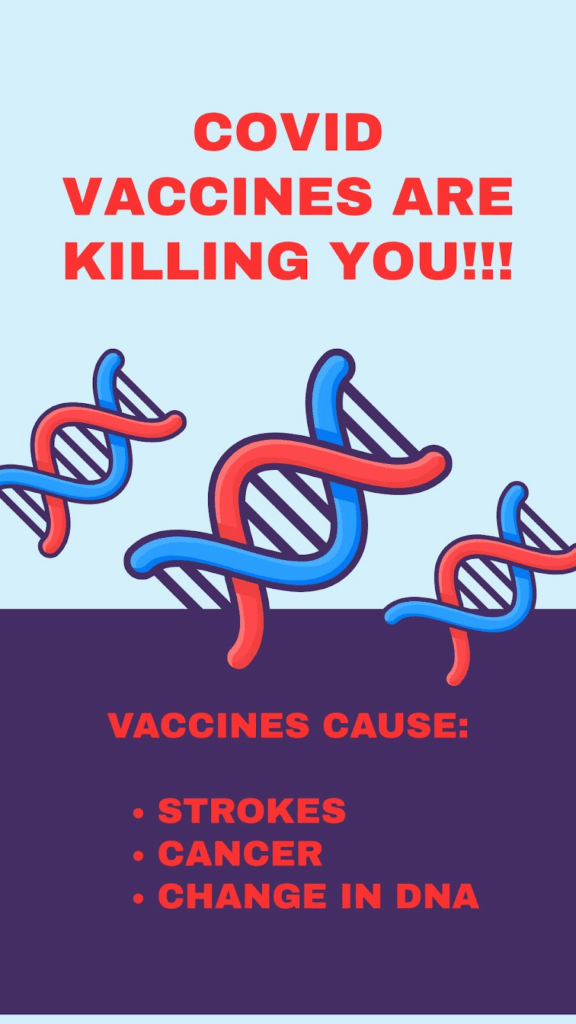
The misinformation spread about COVID-19 vaccinations is one of the most notable examples of how algorithms can encourage confirmation bias and falsehoods. Algorithms are optimized for engagement, during a time of uncertainty where large populations did not even believe the severity of the pandemic, users pushed and encouraged the spread of false information regarding the implications of vaccines. Science Direct states that “large amounts of information, especially complex information, are cognitively taxing, causing people to make gut-based decisions based on intuitions rather than on hard data.” During a time of emotional turmoil and uncertainty, social media posts that used fear driven language and flashy claims, made many people believe that COVID vaccinations could actually be detrimental to their health. Algorithms reinforced these ideas, as the general public became increasingly more exposed to misinformation, they began to believe and share it as well. This manifested as a proliferation of the fearful rhetoric that was getting engagement in certain communities. Those communities would see an onslaught of the same information which reinforced their beliefs. They would rarely recognize the reason behind seeing more of the same content because of their prior engagement with said content rather than its inherent validity. Much like a virus replicates itself, the harmful ideas were replicated once they were interacted with.
Examples of Instagram stories spreading misinformation on vaccines:
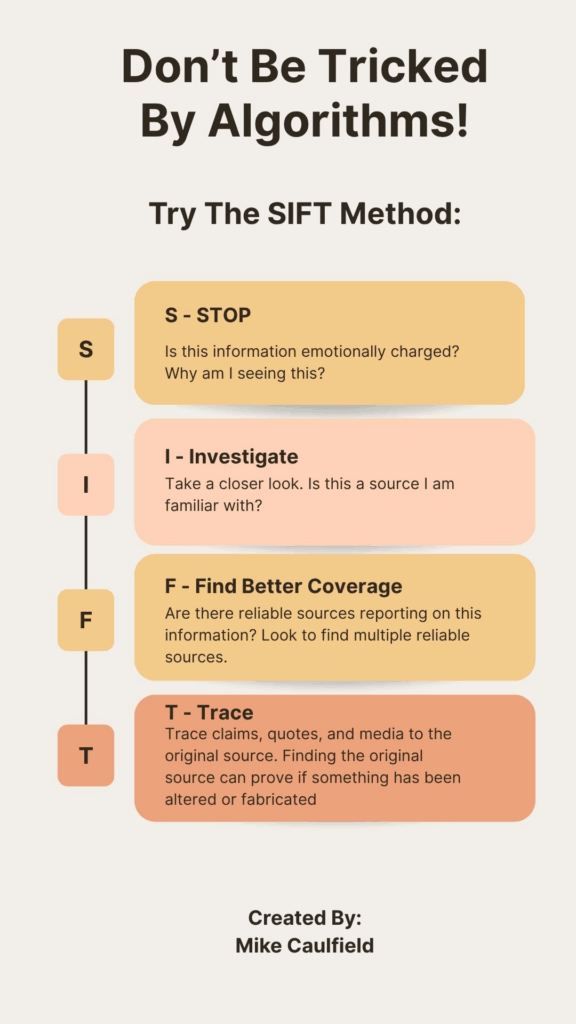
While the conversation of who’s responsible for diminishing misinformation online is one that is needed. At this moment in time, you are guaranteed to come into contact with content that spreads false information and encourages confirmation bias. It can seem like a daunting task to become less susceptible to misinformation, however with some simple techniques you can become a more media literate and critical thinker when online.
Here’s an infographic I made breaking down the SIFT Method:
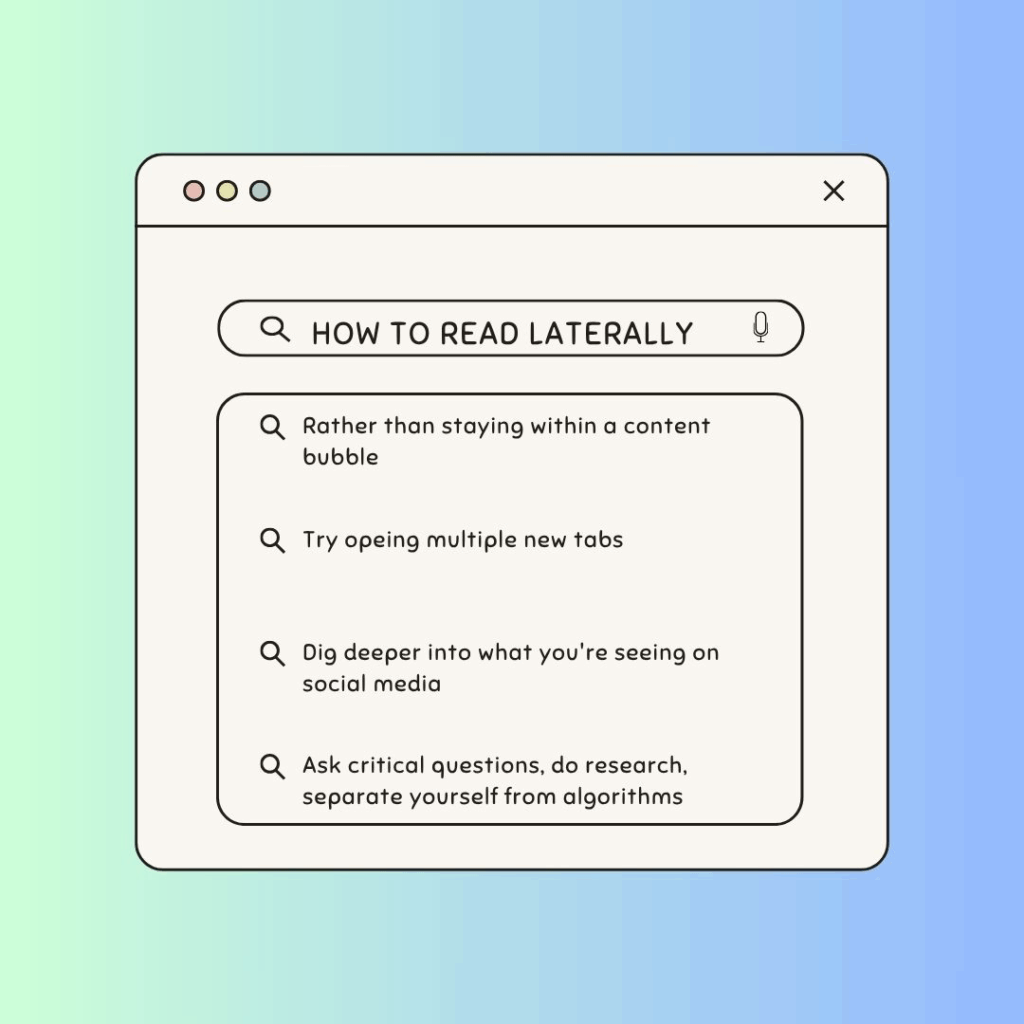
Here’s an infographic I made on the Lateral Reading Technique: