Category: Blog Posts

  • Who Owns Our Conversations?

    Like most people, I spend much of my free time online. Whether on TikTok or Instagram, I am scrolling through a constant stream of information. Just like most people, however, I am not fact checking every single video or post I come into contact with. With the new digital age, it’s like a game of telephone. From one TikTok to an Instagram Reel to a post on X, news and ideas spread. However, without proper moderation, online information can become easily malleable, therefore creating misinformation. Moreover, inaccurate content is not the sole concern. Now, the digital landscape in some ways has become a free for all. Content that goes unchecked has led to vast harassment, trolling, and harm. When looking for solutions to misinformation and online behavior comes the fear of censorship. Who is to say something is false or true? What is the motive behind allowing certain information to be posted but not others? As our technology evolves, so should the systems that control it. 

    Digital Public Squares

    The idea of a Public Square is an idealistic dream. A location where conversation and debate is encouraged, where people of all backgrounds can gather. However, breaking down this utopian space shows how vastly different it is from the social media platforms that we have developed. 

    Yale Law Journal states, “while social-media forums may feel like public spaces, and the companies that own them may exploit this perception to their advantage, their relationship to the public is fundamentally commercial and contractual.”

    Social media platforms like Instagram, Facebook, and X have become centralized, the complete opposite of what a public square is intended to be. While centralized platforms are often widely accessible and easy to use, the drawback often outweighs the good. As social media has become widely popularized, so have algorithms. When pursuing your social media feed, it can be difficult to discern content curated purely for your benefit or for the benefit of others. Yes, as users of these platforms, we are asking for personal curation. However, it becomes concerning when we are not explicitly told why we are seeing certain information and not others. Facebook and Instagram are owned by Mark Zucherburg, X by Elon Musk, but are these individuals creating platforms as “Public Squares” or for their own economic and political benefit? 

    Ideally, platforms made for and by the public are what we should be striving for. Platforms like Wikipedia that are run by a multitude of individuals for the sole purpose of educating and inviting growth, rather than spaces made purely for monetary gain. 

    Censorship or Protection?

    While having social media companies control and regulate our content can be concerning, it is also important to note the areas where this provides a safer, more trustworthy environment. Policies set up by platforms ensure the removal of false accounts and harassment as a way to protect users from harm. An example of successful regulation was when New Jersey state Senator Declan O’Scanlon used the former app Twitter to discourage COVID-19 vaccines. As a result of his misleading language and information, his account was temporarily suspended. While this sparked outrage from right leaning users, it was a step taken by Twitter to enforce the posting of credible and true content. 

    Similarly, the conservative influencer Douglass Mackey was convicted for depriving people of the right to vote during the 2016 Presidential election. Utilizing numerous Twitter accounts to disseminate disinformation regarding Hillary Clinton, Mackey created conspiracies and rumours that harmed the public perception of the candidate. He spread blatant lies and doctored photos to target specific demographics.

    In many ways, social media does indeed reflect the concept of Public Squares. Platforms are meant to be spaces of communal gathering where ideas and thoughts are shared. However, the involvement of private organizations and individuals running these platforms interferes with the free landscape. While the current state of social media in our society has numerous issues, these examples by The Free Speech Project are evidence that some form of regulation and monitoring is a necessity. 
  • Editing a Wikipedia Pages

    By Penelope Sofias

    This week I edited the La Crescenta, California Wikipedia page.

    I was tasked with the mission of editing a Wikipedia page that I had significant knowledge of. After much deliberation, I decided to look into the Wikipedia page on my hometown of La Crescenta, California. While La Crescenta is in very close proximity to Los Angeles and other large cities like Glendale and Pasadena, not many outside of the unincorporated community know much about it. As a lifelong resident, walking the streets, participating in community events, and learning about the place I call home, I feel I have become quite knowledgeable on the neighborhood’s history. 

    Going into this project, I first started by thoroughly reading through the pre-existing Wikipedia page. The information I found was surely credible, I saw no signs of misinformation. However, in the categories of “In Popular Culture” and “Points of Historical Interest”, I felt that I had certain insights on landmarks that should be mentioned and added. While the existing page had already mentioned the landmarks of the La Crescenta Motel and Rockhaven, I felt that more information could be included to show their historical relevance. 

    As I started my research process and drafted up my edits, I found myself feeling quite intimidated. While there is certainly the common notion that Wikipedia is an unreliable source due to the fact that anyone can edit its information, what I have learned from my Digital Media Literacy course and by observing the “Talk” pages on Wikipedia, I have come to discover that there is a responsibility that Wikipedia editors not only have, but abide by. Understanding the high expectations that Wikipedia has for its editors encouraged me to go through multiple sources, ensuring that my additions to the page would be accurate. Before I dove too deep into the research process, I wanted to run my ideas with other editors on the “Talk” page. I expressed my amateur standing as an editor while expressing the changes I wanted to make. Unfortunately, I did not receive any replies. While I was hoping for constructive feedback, I had to make my edits without hearing what others had to say.

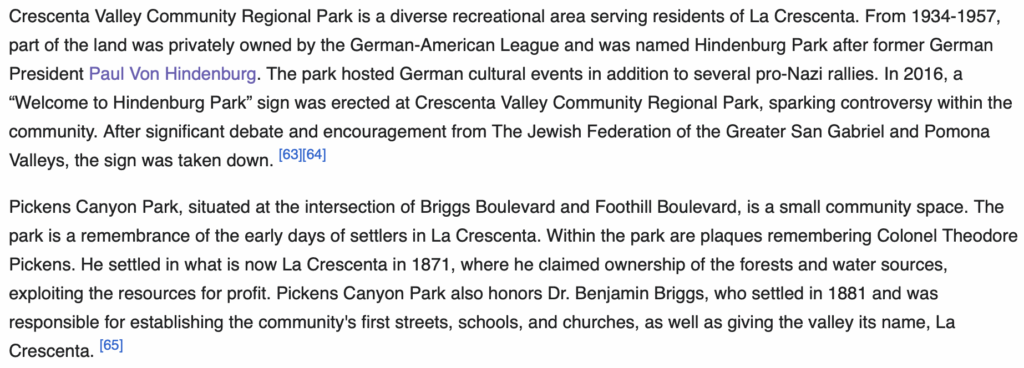
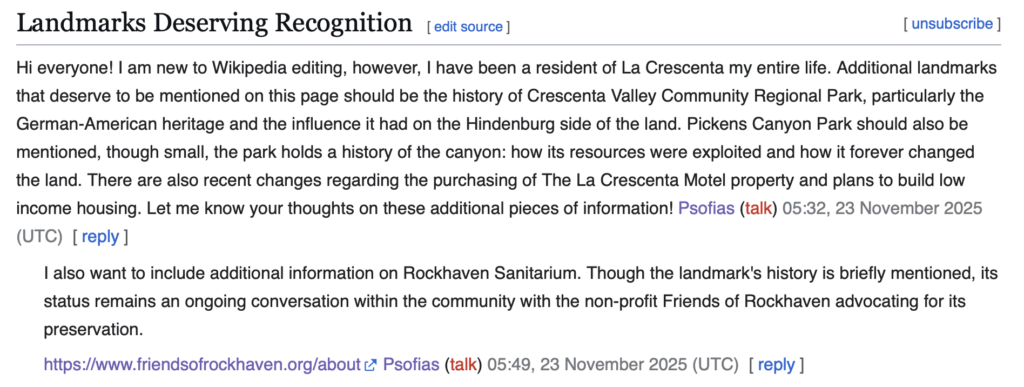
    My message on the “Talk” page:

    My most significant challenge was learning to write my edits in an encyclopedic tone. While I felt confident in the content that I was contributing to the page, I wanted to ensure that I followed the correct writing style. I found that I had to find a balance between writing enough information without my edits becoming a full biography. Another difficulty I faced was grasping how to interact with the Wikipedia interface. Though I now understand that it is quite simple, I was at first unnerved by the process of adding sources and links, especially to other Wikipedia pages when I mentioned historical figures. As I wrote my edits however, I grew in my comfortability.

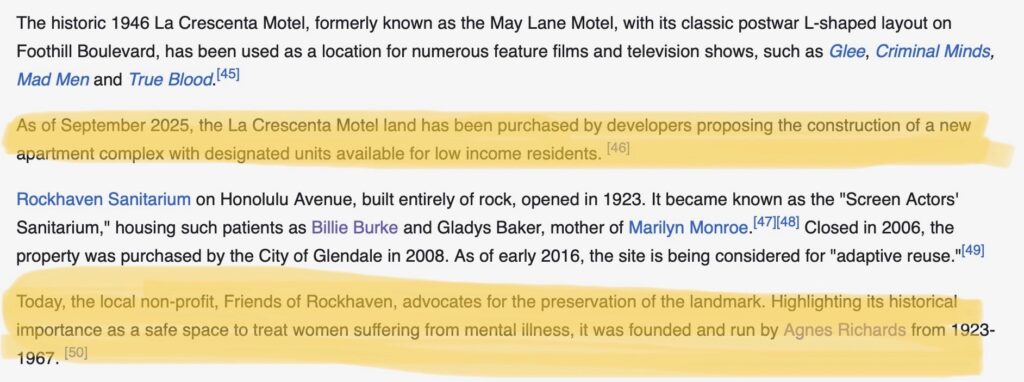
    The edits I made:

    Overall, this editing journey was an enlightening experience. I feel like I have more respect for Wikipedia as a source of information. Looking through the previous conversations that took place on the “Talk” page and tracing the sources that others cited, proved to me that Wikipedia is a collaborative resource that relies heavily on credibility and mutual moderation. I’m excited to see what others have to say about my contributions on the La Crescenta Wikipedia page or if other edits will be made. 

  • Experiment with AI Text Generation

    Penelope Sofias

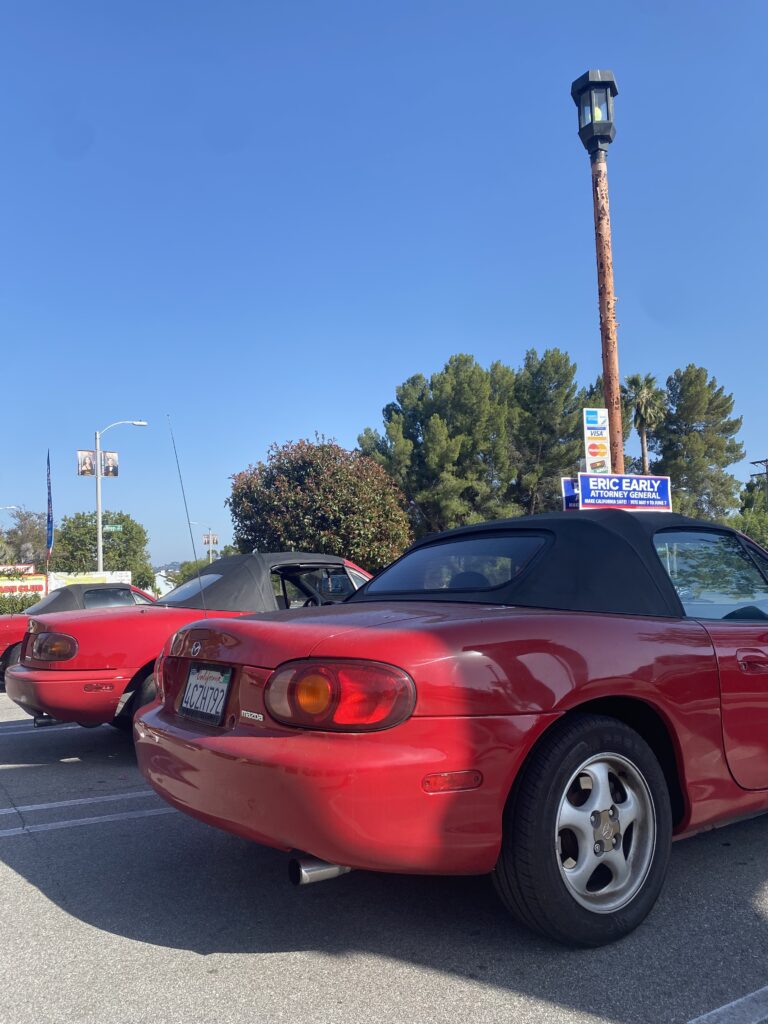
    I thoroughly enjoyed this experience of using ChatGPT to write a faux blog post on the Mazda Miata. I own a 1999 Mazda Miata and throughout the years I’ve learned a lot about the car. It was revolutionary in the automotive industry with its design, reliability and the culture that it created. Even though I feel like I have become quite knowledgeable about the car’s history, using artificial intelligence actually encouraged me to do more research on it.

    I found that ChatGPT was surprisingly quite accurate in its statements and summary. There was no blatant misinformation, however, I found that it certainly downplayed some of the notable facts that are part of the history of the Mazda Miata. While it provided a broad overview, I was surprised that the pseudo post did not provide more details on the creative vision, the safety concerns, and the overall struggle that it took to create the vehicle. Maybe I had high expectations, but I thought that ChatGPT would create a post that included more detailed information, similar to the YouTube video that I had linked in my edits.

    As much as I actually do trust the content that ChatGPT produced, I certainly do not think it captured the human nature that a blog post should have. When discussing niche topics, like the history of the Mazda Miata, there is a certain “feeling” and culture that needs to be incorporated. Miatas have a cult following, it has become a classic car that is desired by many. From owning one myself, I have learned so much about its history through Reddit, Instagram pages, and in person Miata car meets and I don’t think AI can perfectly capture that.

    Check out the post that ChatGPT created and the suggestions I made on my Google Doc!

  • Post with Video: Animation

    Listen to me speak on the current events of the animation industry!

    There is a vast array of types of media we can consume. Personally, the medium of animation is my favorite! Animation can tell stories in such unique and impactful ways. When most people think of animation, Disney is the first thing to come to mind. This is because Disney popularized and developed the animation that is used today. Snow White and the Seven Dwarfs was the first English and technicolor feature animation. After the classic fairytale rendition, animation became a world wide sensation.

    While Disney can surely be credited with innovations in the animation industry, there are so many animators, creators, and storytellers outside of the popular corporate giants that are known today. In fact, these massive companies are in many ways making the path to success far more difficult for small animators. The Los Angeles Times speaks on the rise of streaming platforms and the reality of them prioritizing finances over creativity. Describing how streaming services are “scrapping numerous projects and removing existing titles from their platforms completely” due to budget cuts. These mainstream studios and platforms are also no stranger to cutting shows due to brand image and creative differences. 

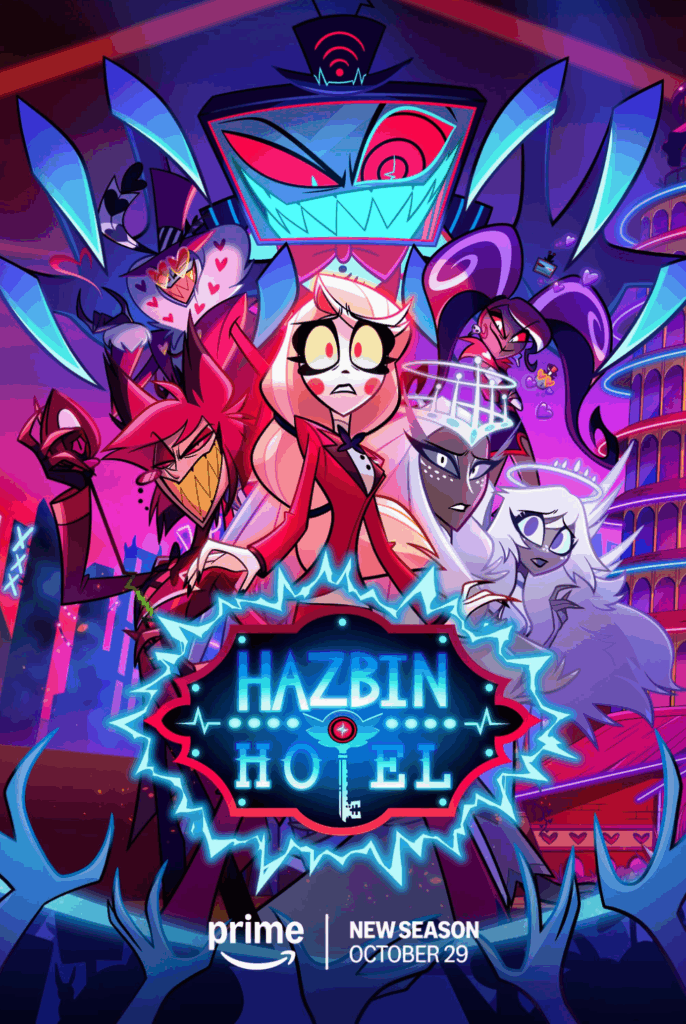
    While many shows have faced the hardships of working under large corporations, recently, small production studios have found success from working with big names like Amazon and Netflix. The small studio, Glitch Productions, had their popular show The Amazing Digital Circus, acquired by Netflix. Similarly, Amazon has bought Vivienne Medrano’s shows Hazbin Hotel and Helluva Boss for more seasons. While it can be complicated having large companies buy out small animation projects, there are also many pros. These studios are able to have their stories reach new audiences and are able to receive the funding that allows them to have access to better animation resources and technology.

    Check out some of my favorite animation series!

    Steven Universe: 

    (Cartoon Network)

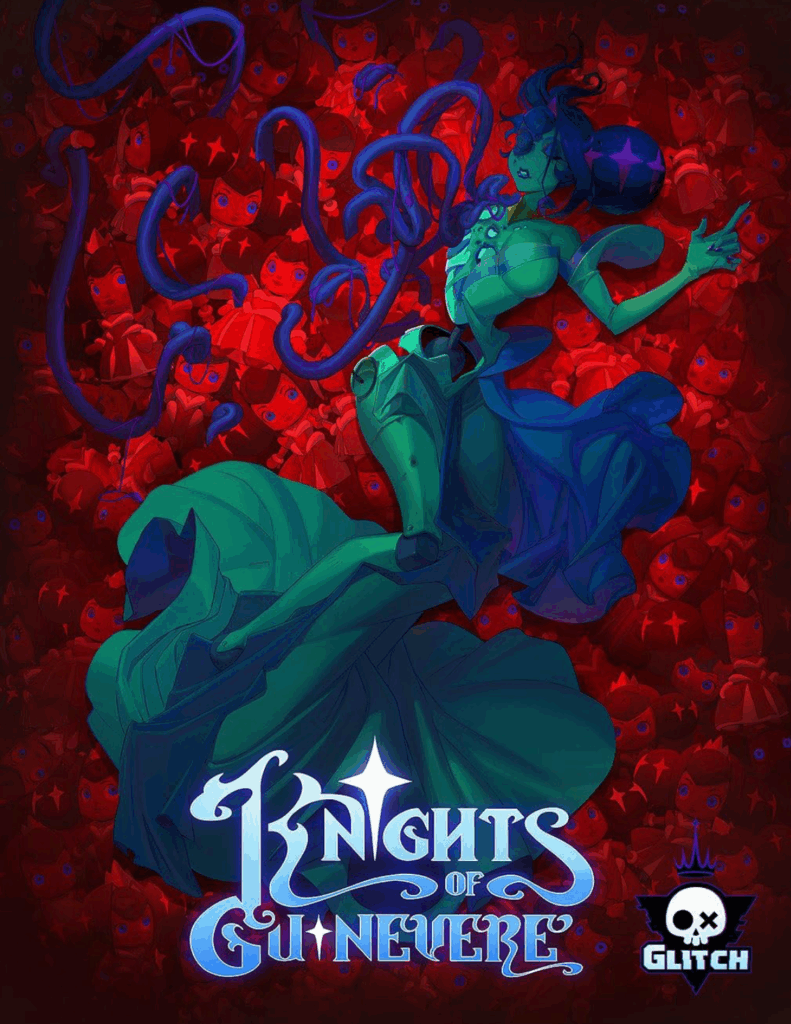
    Knights of Guenivere:

    (Glitch Productions)

    Hazbin Hotel:

    (VivziePop)

  • Post with Pictures

    By Penelope Sofias

    Images and visuals are an incredibly impactful medium. Humans process images quickly, we associate images with information and memories, and often have emotional responses to what we see. As a result of the powerful nature that comes with visuals, creating them has become a respected skill. From photographers, to animators, graphic designers, and illustrators, there are numerous careers that have flourished from the hard work of creating images. “Creatives” are not limited to only images in the digital world, now we have vloggers and influencers, musicians, and movie directors. Visuals are a part of everything and that is why copyright and other forms of rights infringement apply to all of us in this modern landscape. While these systems are put in place to protect the intellectual property of numerous creators, there are also many dangers when it comes to using the work of others, being inspired by other work, and even ensuring the safety of your own personal creations. 

    With social media and our ability to document events in real time, almost everyone can be their own reporter. The Electronic Frontier Foundation gives the average person a guide to be their own journalist. Whether you want to be a blogger, want to access public records, or simply want to become more media literate. The EFF explains our First Amendment Rights and how they are applicable when creating content or gathering information.

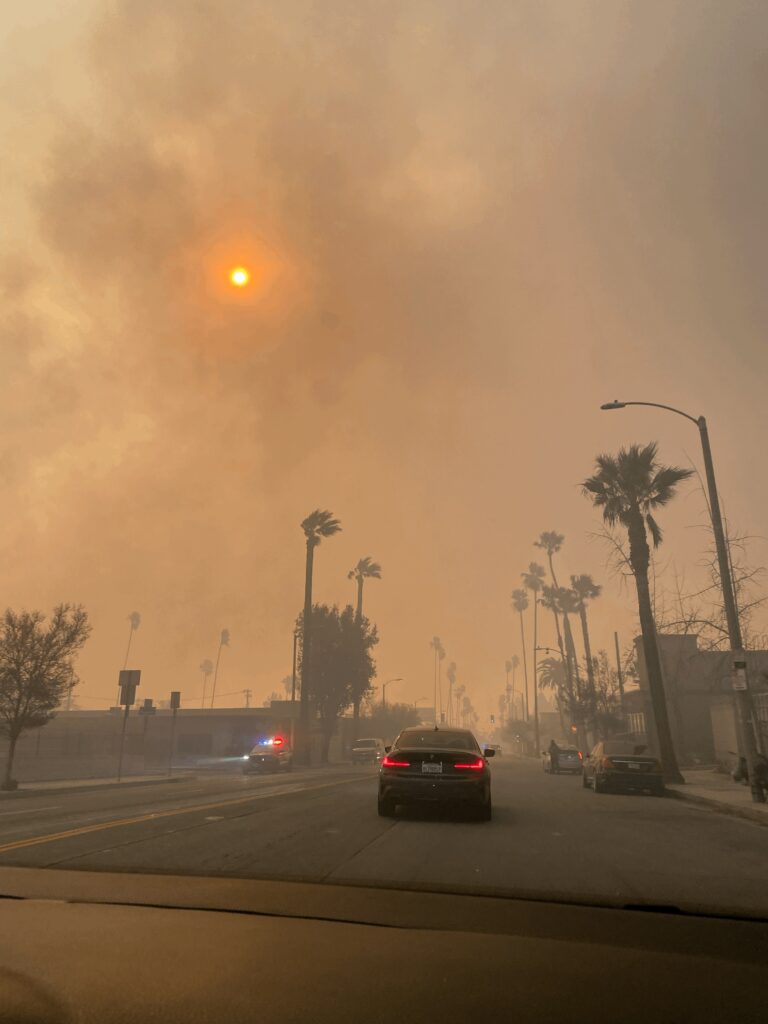
    Back in January, I experienced the fear of being in close proximity to the Eaton Fires. I was able to document the events in real time and communicate with family and friends through images. While I never publicly posted my photos, I had friends and family who had their content used by news stations without permission or credit. 

    Here’s an example of my own personal photos during the Eaton Fires:

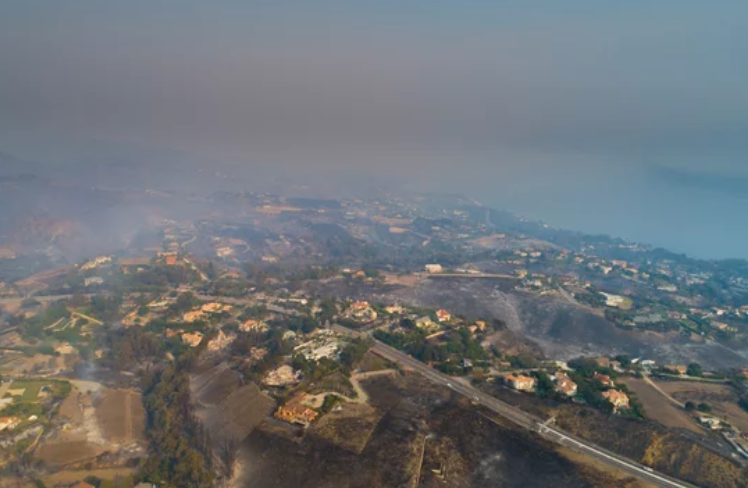
    Here’s an example of the type of image that Adobe Stock provides when I search “Eaton Fires”:

    While royalty free commons can be risky when trying to show documented events, it is a great resource for creators when trying to use images to convey a certain message. 

    A new danger in the world of documentation and visuals is the use of Artificial Intelligence. As seen in our modules, AI can often be used to create images that can cause harm. Whether from replicating the artwork of others as this Medium article discusses, or by depicting false events like the fake Pentagon explosion, AI can have serious consequences. 

    Here’s the result from prompting the AI tool DALL-E to create an image depicting the aftermath of the fires in Altadena, CA:

    Images are thought provoking tools. They can cause conversation and thought, share current events, and inspire new works. However, they can also cause misinformation, plagiarism, and harm. It’s crucial to understand the ethics behind using the work of others or creating your own visuals, whether through the use of Artificial Intelligence or your own work.

  • Misinformation And Creativity!

    Algorithms In The Modern World:

    “Algorithmic curation will tend to amplify trends toward information homogeneity at the level of the individual”

    Thorson and Wells

    Algorithms are technological tools that collect trends in user data in order to predict what a viewer engages with. Almost everyone utilizes social media, as a result, the average person is constantly participating in algorithms. They are what curate what you see online every single day. While they can be handy, helping you find new artists in your favorite music genre or showing you memes that are sure to make you laugh, they can also be harmful by enhancing biased views and encouraging the spread of misinformation and falsehoods. What is recommended is what you already enjoy or believe, not what is true or verified.

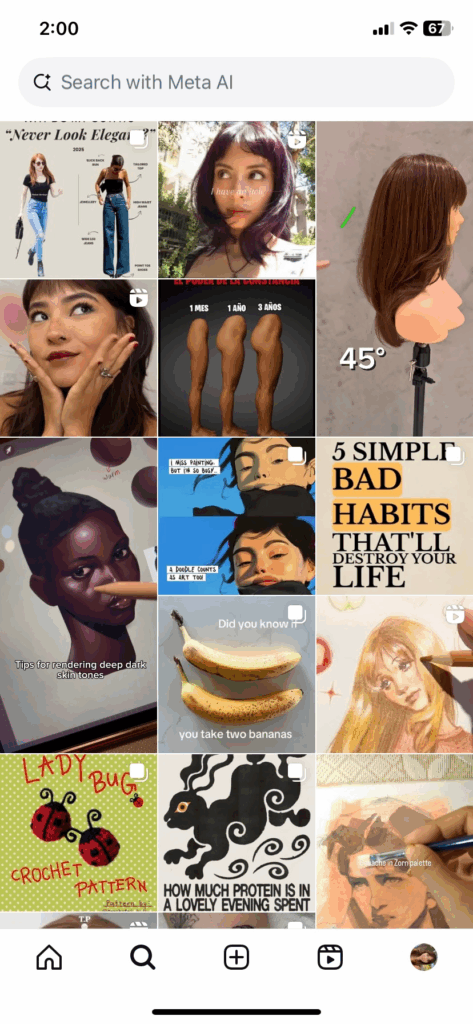
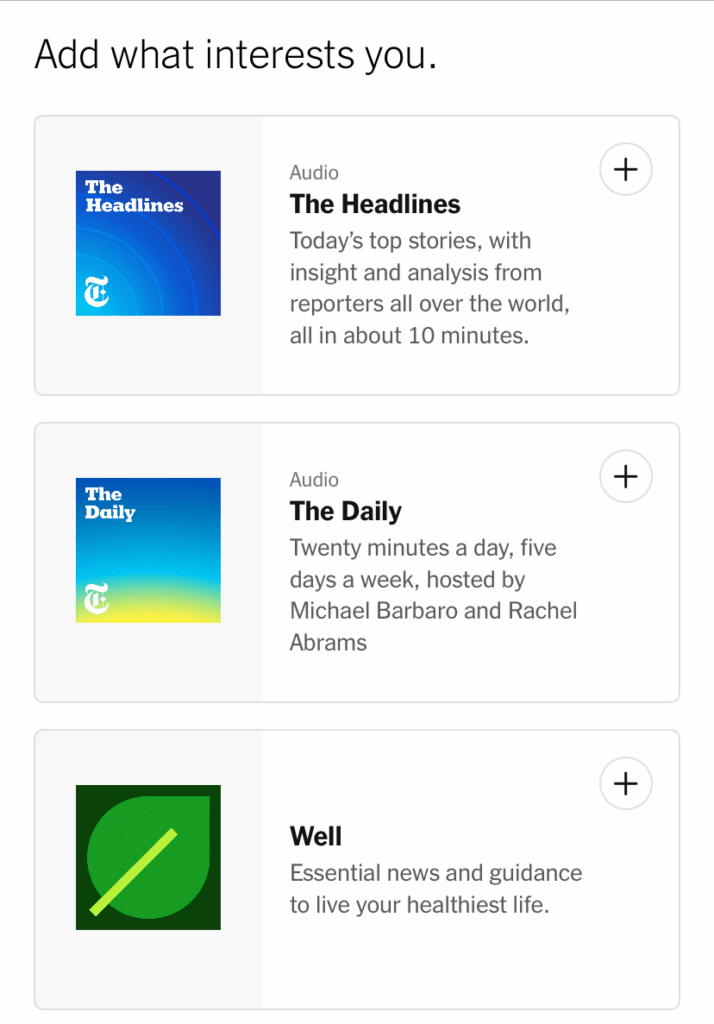
    Almost any platform you open utilizes algorithms to produce specially curated content just for you. From Instagram’s “Explore Page” and TikTok’s “For You Page”, to even news outlets like The New York Times asking you to choose topics of interest when you first subscribe, algorithms dictate what you will and won’t see.

    My Instagram “Explore Page” and The New York Time’s “You” Page:

    What started as an innocent way for users to see the material that will receive a like, a comment, or a share has now created a warped perception of what the digital world contains. This form of confirmation bias can also be taken advantage of by users to promote their own ideologies. What is created is what will get engagement from their target audience and feed into their already specified niche.

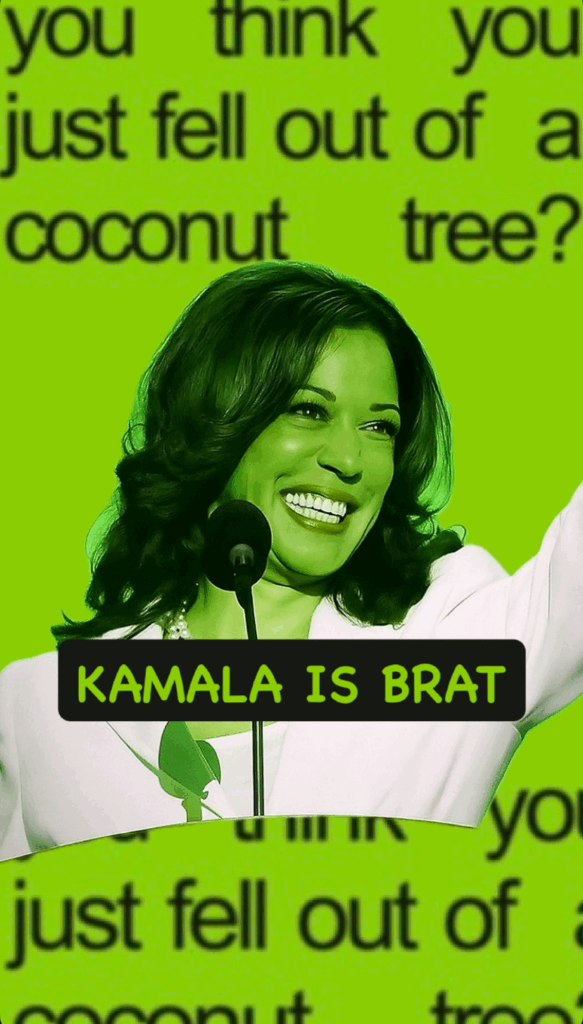
    Looking back at the most recent U.S. Presidential election, Democratic candidate Kamala Harris is the perfect example of how users can take advantage of trends and algorithms to create engagement. While Harris did not necessarily promote misinformation, hopping on trends like Charli XCX’s “Brat” reinforced the filter bubbles of younger online audiences. The Washington Post discusses how algorithms play a role in politics with “liberal and conservative users seeing and interacting with vastly different news sources”. Politicizing the average youth’s “For You Page” was an active way of encouraging an echo chamber of beliefs. 

    Example of the type of trend following posts I saw during the 2024 election:

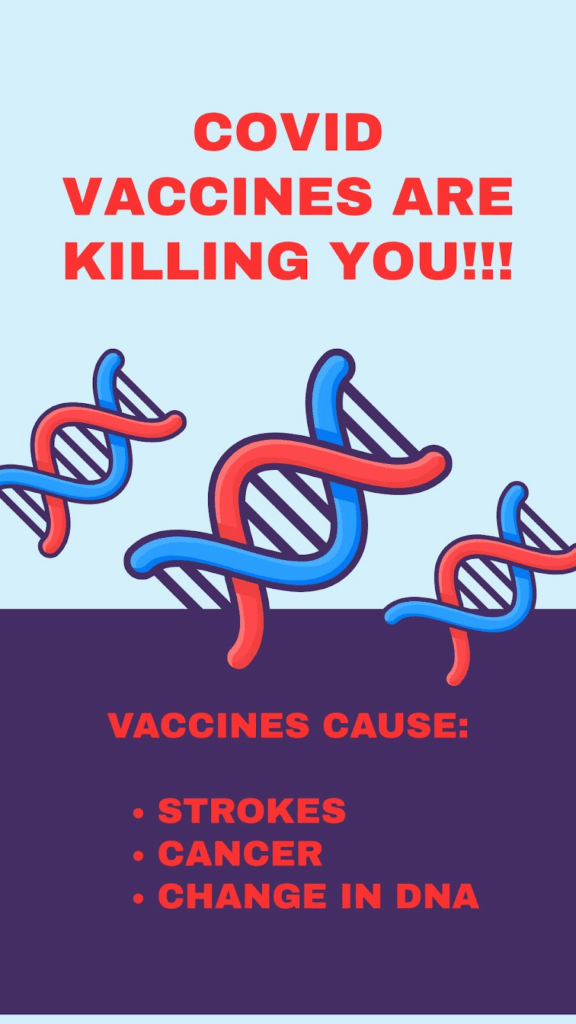
    The misinformation spread about COVID-19 vaccinations is one of the most notable examples of how algorithms can encourage confirmation bias and falsehoods. Algorithms are optimized for engagement, during a time of uncertainty where large populations did not even believe the severity of the pandemic, users pushed and encouraged the spread of false information regarding the implications of vaccines. Science Direct states that “large amounts of information, especially complex information, are cognitively taxing, causing people to make gut-based decisions based on intuitions rather than on hard data.” During a time of emotional turmoil and uncertainty, social media posts that used fear driven language and flashy claims, made many people believe that COVID vaccinations could actually be detrimental to their health. Algorithms reinforced these ideas, as the general public became increasingly more exposed to misinformation, they began to believe and share it as well. This manifested as a proliferation of the fearful rhetoric that was getting engagement in certain communities. Those communities would see an onslaught of the same information which reinforced their beliefs. They would rarely recognize the reason behind seeing more of the same content because of their prior engagement with said content rather than its inherent validity. Much like a virus replicates itself, the harmful ideas were replicated once they were interacted with. 

    Examples of Instagram stories spreading misinformation on vaccines:

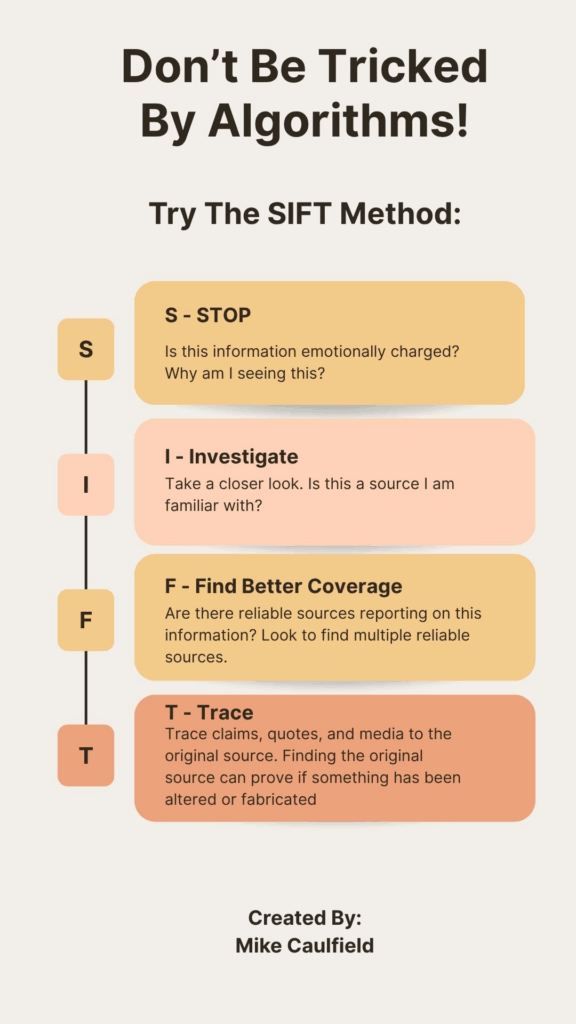
    While the conversation of who’s responsible for diminishing misinformation online is one that is needed. At this moment in time, you are guaranteed to come into contact with content that spreads false information and encourages confirmation bias. It can seem like a daunting task to become less susceptible to misinformation, however with some simple techniques you can become a more media literate and critical thinker when online.

    Here’s an infographic I made breaking down the SIFT Method:

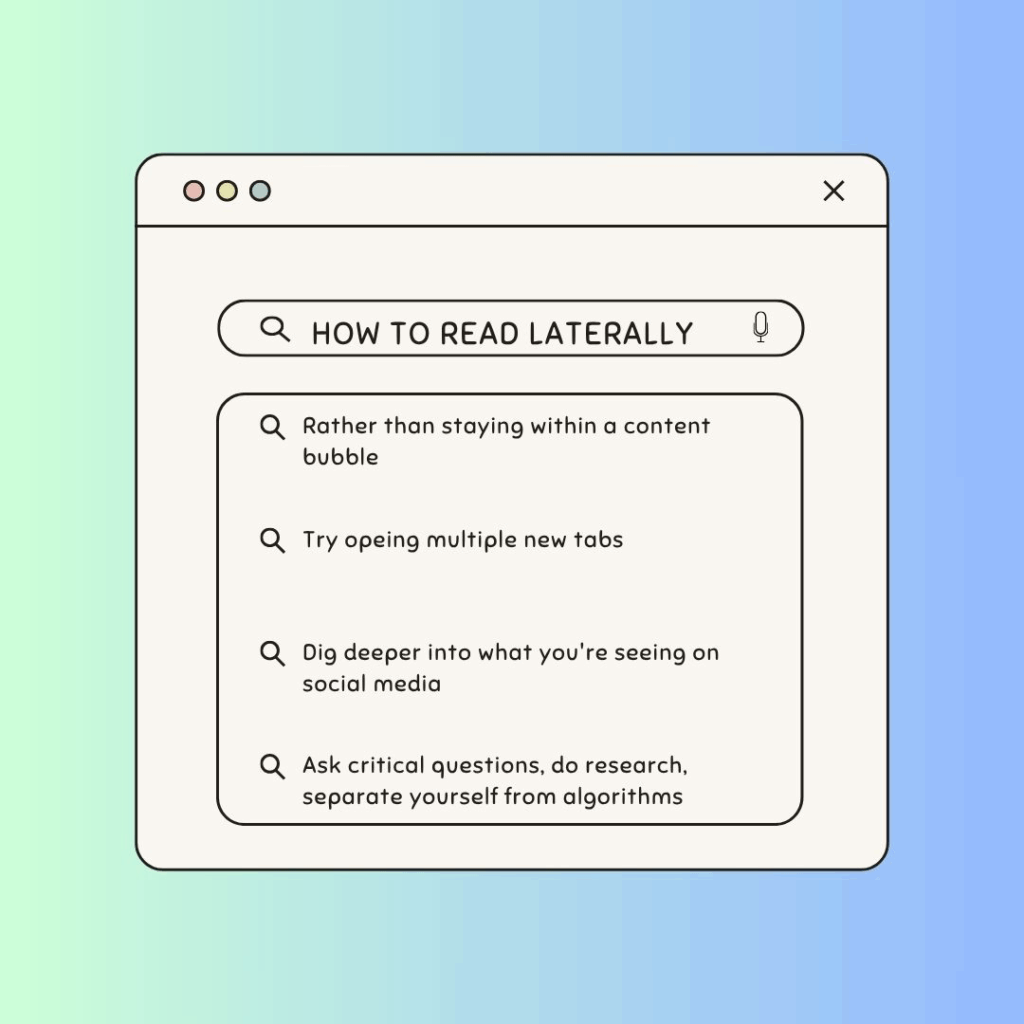
    Here’s an infographic I made on the Lateral Reading Technique:

  • Assessing Current Platforms’ Attempts to Curb Misinformation

    By Penelope Sofias

    This week I decided to look into two platforms and the policies they have set in place that address and combat the spread of misinformation. I chose Instagram, my most used form of social media, and Reddit, a platform I use on occasion but am not as familiar with. With my experience on Instagram, I have observed how the app curbs misinformation and harmful content through post warnings and privacy policy updates. While I use Reddit, it is usually for the occasional niche question and I haven’t noticed much information on the platform’s policies. This week, I am diving in to understand more on how misinformation can be curbed by these prominent platforms.

    Instagram:

    Instagram has swiftly become one of the most popular social media platforms in the digital world. It has become a hub for a variety of different communities, connecting people with friends, family, and strangers through visuals. Whether through posts, stories, and now threads, Instagram is a source for spreading a spectrum of information. 

    Instagram is owned by Meta. By looking into Meta’s approach to handling misinformation, I found a feature exclusively in The United States that was released earlier this year called Community Notes. This is a program that is open to the public based on a variety of qualifying factors. The goal of Community Notes is to add context to a post. If the post holds a strong claim that is not necessarily false, but is not backed up by evidence, users can draft up a note that must include credible sources. When multiple users contribute notes to a single post, these notes are then highlighted to the public. This is a community based way intended to provide background information and contextualize original posts so Instagram users can make informed decisions.

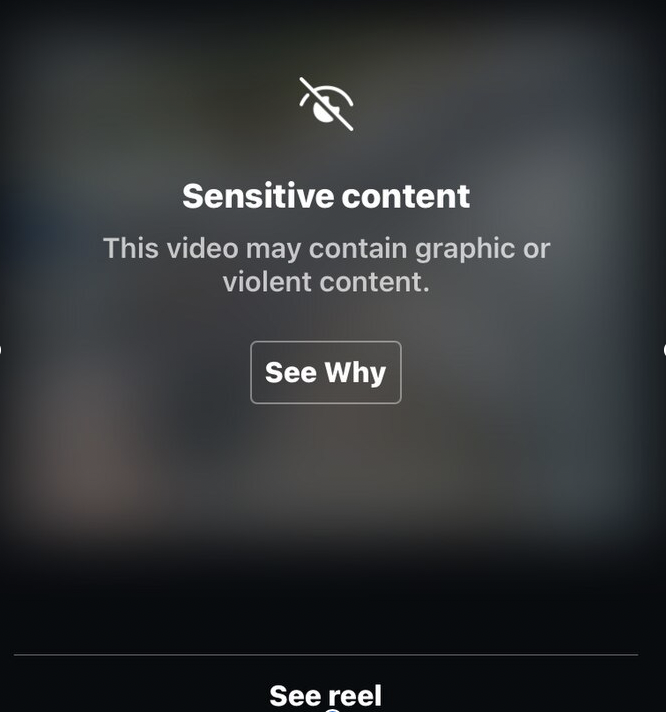
    Outside of The United States, Meta utilizes third party fact checkers through the non-partisan International Fact-Checking Network to ensure that misinformation is labeled appropriately and action is taken. By labeling flagged posts in different categories like “False, Altered, or Partly False” Instagram then takes action in different forms of severity. Algorithm technology is utilized to suppress posts that have been flagged. If a post fully violates guidelines like a post producing hate speech or using a false identity, the account and its content will be fully removed. If a post does not fully breach Meta’s policies but has still been flagged, technology is used to minimize the number of people that come in contact with it. Meta also utilizes “visual labels” to notify Instagram users if a post contains sponsored information, graphic or harmful content, and now even AI generated 

    Example of Instagram’s “Visual Warnings”:

    While it was enlightening to learn of the numerous fact checking features that Instagram and Meta incorporate into their platforms and action plans, I also can see how this is not enough to truly sift through misinformation. As we have learned, misinformation is spread when it is eye catching and emotionally charged, utilizing clickbait techniques. It is also spread by encouraging and taking advantage of like minded thoughts and opinions. While having fact checking available to the public and verified third parties is certainly helpful, I feel as though Instagram could do more. While using algorithm technology to reduce misinformation is great, algorithms can also be harmful in creating echo chambers of information, whether true or false. This Washington Post article highlights Instagram’s “limit even more” setting which allows users to adjust their personalized content in the app’s individual settings. However, users have also expressed how this setting doesn’t treat all content equally. It also raises the question of why users must go through so many hurdles to avoid harmful content. As I become more media literate, I feel like I am more capable of sifting through misinformation on Instagram. I appreciate the visual labels that warn users about graphic content but I have even noticed how that warning in itself can be seen loosely as “clickbait”. When I see warnings like that, I become even more curious about what is about to be shown to me and not as aware of the fact that it can be misinformation. Instagram certainly has room for improvement, especially through the use of algorithms that suppress certain information but push other content.

    Reddit:

    Reddit is a forum based platform which allows users to connect over and discuss incredibly niche topics. While I wouldn’t consider myself an active user, I certainly find Reddit to be a great source of information when it comes to random questions and when I need specific insight. However, because it is such a public forum, I was curious to see how a space with so many people talking about specific topics handles misinformation. 

    Looking into Reddit’s approach to content moderation, I discovered that they monitor misinformation through volunteer Moderators or “Mods”. While all Reddit users must follow Reddit’s rules and guidelines, a large portion of surveillance is done by the users themselves, the individuals who create their own community based “subreddits”. 

    Similar to how Instagram puts into action algorithms and tech, Reddit utilizes technology based systems to ensure that content posted on the platform is in line with both subreddit creators and Reddit’s own policies. These are in the form of automated tooling like “AutoMod”, a system that is tailored by creators and manages their content and specific rules. 

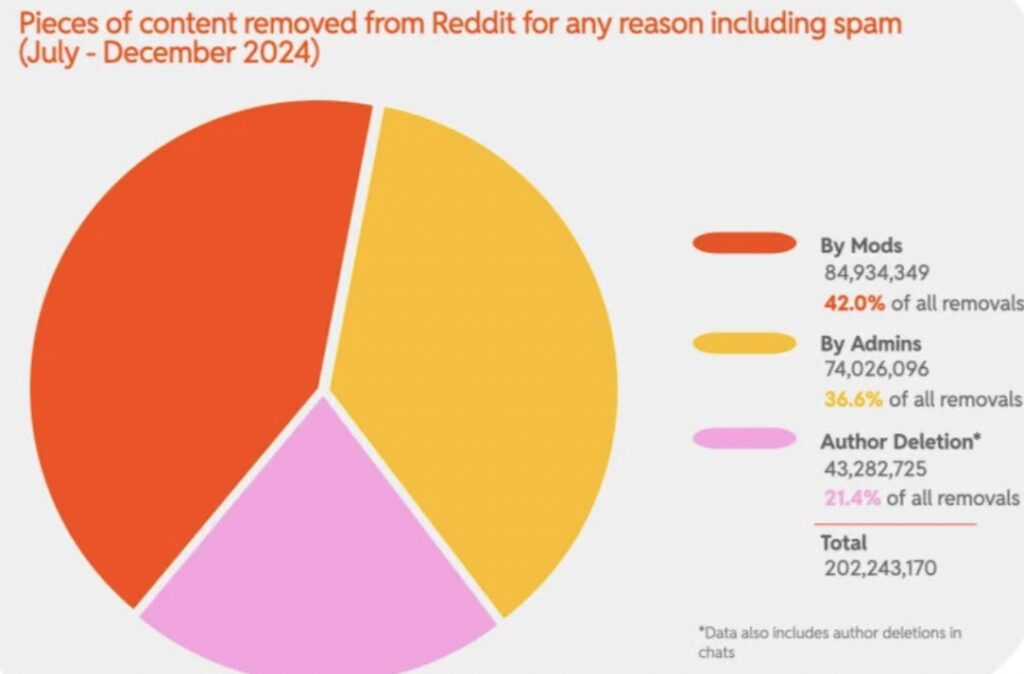
    This Reddit diagram shows the information removed by Reddit, Mods, and Admin:

    Screenshot

    While Reddit is a great medium for exchanging ideas and views in a community based way, there are certainly drawbacks to this kind of platform. Unlike the massive platforms run by Meta, Reddit does not necessarily have a fact checking system set in place. This NPR article interviews Lulu Garcia-Navarro, a volunteer Reddit Moderator and how she navigates misinformation in a community forum setting. Unfortunately, I have gathered that just like this interview said, Reddit is a primarily “self-regulated” platform. Yes, users have to follow guidelines and can’t outright post harmful content and language, but there doesn’t seem to be a strict system that sifts through misinformation and encourages users to have educated judgment when it comes to coming across new information. While Instagram is by no means perfect, I could see how using a similar institution of third party fact checkers could help Reddit become a more reliable platform.

    Conclusion:

    Both Instagram and Reddit are unique in the way that information is distributed, however, there is no doubt that even with policies set in place, these platforms no doubt have misinformation spread among users. It’s interesting to see how there is a fine line between allowing free speech but maintaining a trustworthy and safe environment for users. I am not entirely sure how to move the needle on misinformation for the better, however it is clear that there needs to be a balance between using technology and AI along with real human based fact checkers. From looking through the way these platforms curb misinformation it is also evident that media literacy is a necessity when navigating social media.

  • Claim Analysis

    By Penelope Sofias

    The online media landscape has a vast array of opinions, claims, and statements. Social media can be a tool used by almost anyone to express feelings and ideals, however, it can be difficult to decipher what these claims mean and what impact they have.

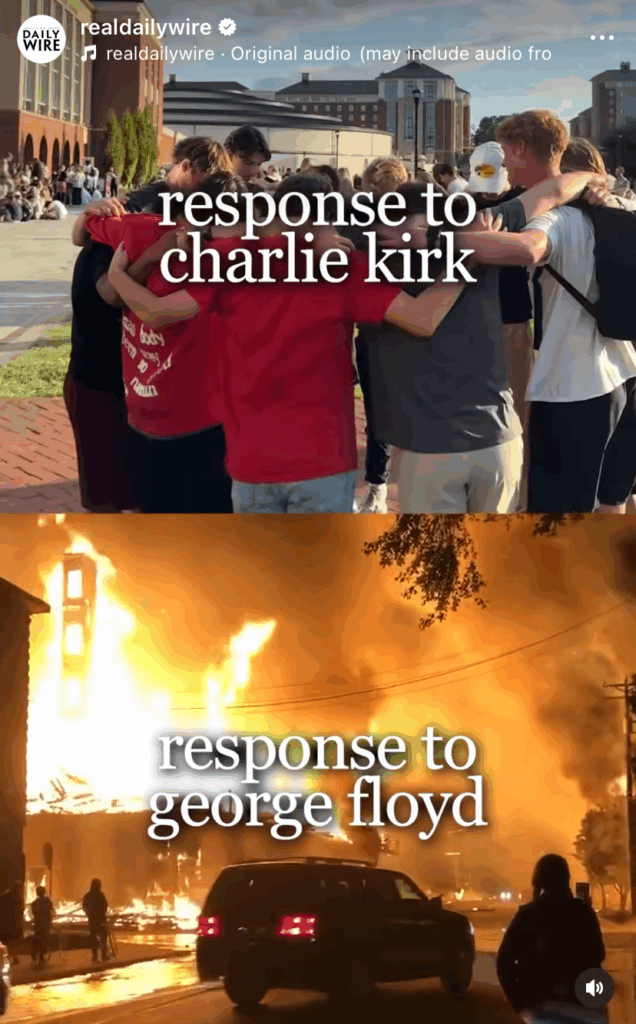
    On September 10th, 2025 conservative politician and activist, Charlie Kirk was shot during a “Prove Me Wrong” speech at Utah Valley University. Kirk’s death has sparked conversation from both political parties about gun violence and free speech. One Instagram post that caught my attention was by The Daily Wire. The post compared reactions of Charlie Kirk’s death to the murder of George Floyd in 2020.

    The Daily Wire Post:

    The caption: “When people stop talking, that’s when you get violence.” – Charlie Kirk

    Using the SIFT Method:

    S- Stop

    This post immediately brought to mind numerous questions. I took a moment to pause and determine why this post caught my eye. Right off the bat, the post is comparing these events meaning that they have similarities but the responses to them are vastly different. It depicts one as wholesome, community based, and loving and the other as violent and criminal. So I ask myself are these comparable events? Are these realistic depictions of the public’s reaction to these events? Where do these different pieces of footage come from? Why are people protesting? Is there more to the story than what is being shown? The fact that this post has so many unanswered questions is the reason why it must be evaluated and looked into.

    I – Investigate

    The source of this post is The Daily Wire. But what is the Daily Wire? With this question in my search engine, Wikipedia states that “The Daily Wire is an American conservative media company founded in 2015 by political commentator Ben Shapiro and film director Jeremy Boreing” and also says that The Daily Wire has a history of reporting from solely a conservative stance, with some stories misstating facts with unverified information. Understanding that The Daily Wire takes a single sided perspective when it comes to journalism is a key point to this post. The juxtaposition between people hugging and praying over the death of Charlie Kirk as opposed to the videos of looting and violence in reaction to George Floyd’s death makes me wonder if there is other footage that is being excluded. 

    F – Find Better Coverage

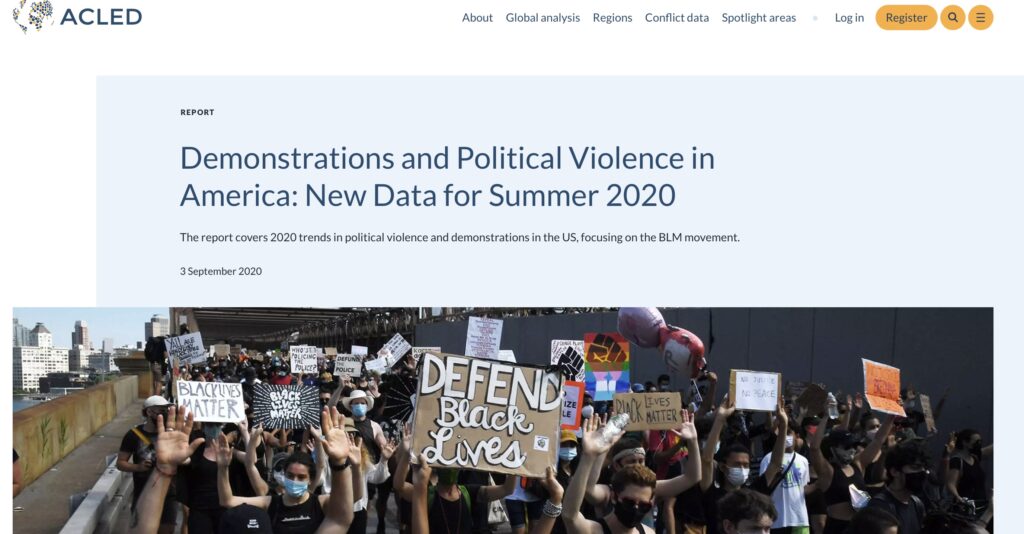
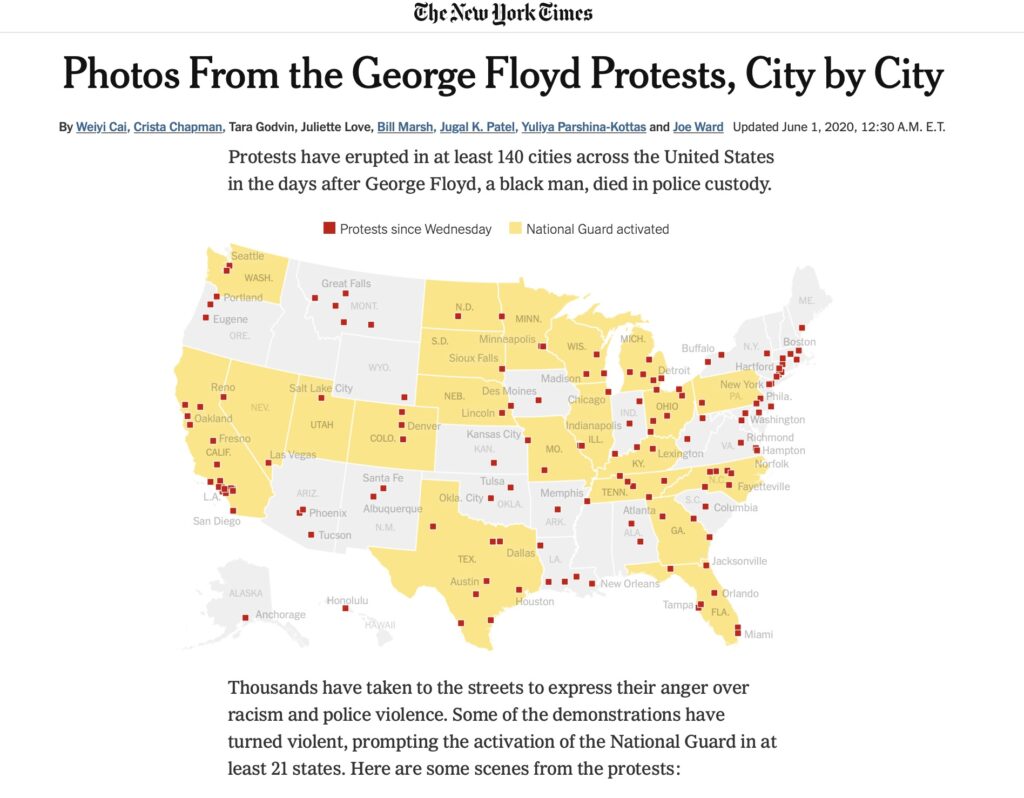
    To find more perspective on the situation at hand, I need to understand if George Floyd’s murder was responded to purely with violence or if there were peaceful protests and acts of civil disobedience as well. To find this out, I use the “Lateral Reading” technique and utilize multiple tabs and searches to find sources outside of The Daily Wire. From looking into numerous articles by The New York Times, TIME, and The Guardian, it is clear that while after George Floyd’s murder there were indeed violent riots, the majority were actually acts of peaceful civil unrest. According to ACLED (Armed Conflict Location & Event Data), a non-profit monitor that analyses conflicts and protests, “In more than 93% of all demonstrations connected to the movement, demonstrators have not engaged in violence or destructive activity”. This proves that The Daily Wire took a biased stance when showing clips of the response to George Floyd’s death. 

    T – Trace claims, quotes, and media to the original context

    To answer the question on where The Daily Wire acquired the footage from, I attempted to reverse image search screenshots of the different clips shown in the post. Unfortunately, because there were so many videos spliced together, it proved difficult to find the original source. While it is clear that the videos shown in the “response to George Floyd” section, include posters that say BLM, it is unclear which protests these were from. Unable to find clear credits and sources, my original thought of “Is this a reliable post?” is strengthened. 

    Conclusion:

    Understanding the background of events like the murders of Charlie Kirk and George Floyd are key to evaluating headlines and posts about them. The Daily Wire painted an entirely violent image in context to George Floyd. This can be dangerous to someone who lacks the background knowledge on the event. Assuming that anyone protesting for George Floyd or Black Lives Matter are violent criminals is a very dangerous take that it seems The Daily Wire is trying to encourage. It’s also important to note however, that George Floyd and Charlie Kirk were both victims of violence. Political commentator Charlie Sykes states in an interview with NPR, “we do not use violence to counter ideas with which we disagree”. While The Daily Wire can argue that the death of Charlie Kirk is an unjust tragedy, it should not be compared to a socio-political movement like BLM. The response to George Floyd was due to police violence brutally targeting a black man. It is crucial to use tools like SIFT and lateral reading, to fact check the information you see online.

  • Evaluating Misinformation Education Tools

    By Penelope Sofias

    In this week’s modules we learned how misinformation is often supported by confirmation bias, motivated reasoning, and an overstimulating flux of content that we interact with. With media literacy comes incredibly complex concepts and techniques for critical thinking. Through playing around with educational games like: News Literacy Project’s RumorGuard and Bad News, I was able to see firsthand why it is so easy for misinformation to spread. I found that breaking down complex ideas into a step by step game was a great way to understand misinformation and its effects. I would highly recommend these games as a tool for eradicating misinformation.

    News Literacy Project’s RumorGuard:

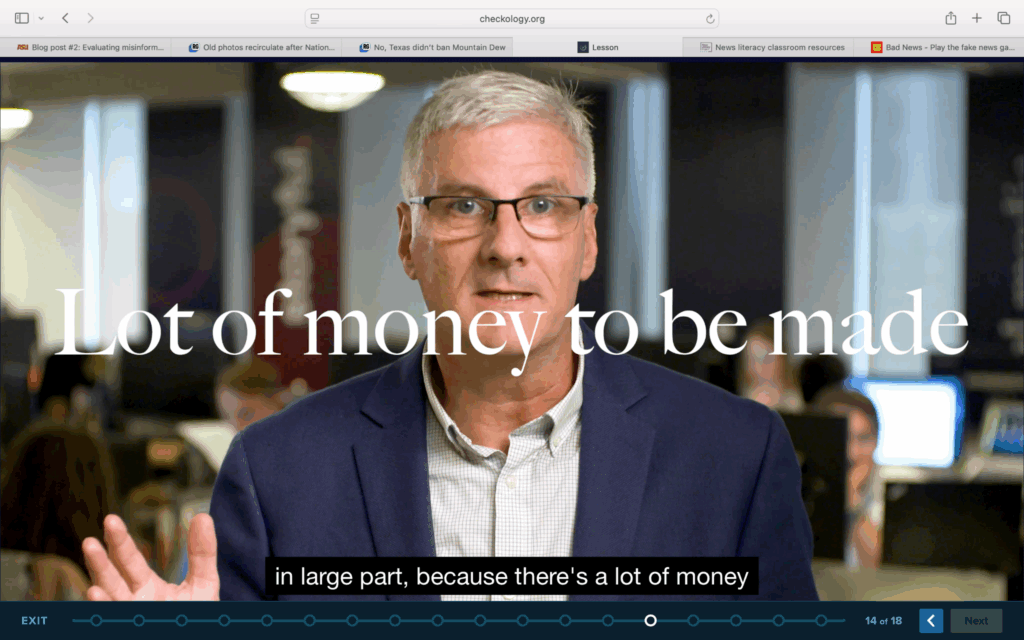
    In News Literacy’s “Verifying Social Media Content” interactive lesson the player is guided through real world events that have circulated in social media and the news. From a viral video of an eagle snatching a baby to a screenshot of a little boy who was a victim of an airstrike, the player is put into a fact checking position. By using strategies and tools, you go through different online stories determining their validity, their source, and the motive behind them. Throughout the game, I learned how there are a few handy tools that can be applied when sifting through misinformation, particularly from a news standpoint. These tools are called the “Three Pillars of Verification” where as the reader, I do my own independent research to establish the specific source, location, and date of the content I engage with. Anyone can make a story public, but with a multitude of apps and channels at our disposal, it can be a challenging task to find the original source of information. This challenge can actually help information be manipulated or altered. Through this lesson, it became clear that pictures and videos can be used out of context to support an entirely unrelated claim. By using  modern tools like reverse image searching and quite simply Googling (strategically), we can find specific information like source, location, and date to not only find the origin of information but to find the motivation and intent behind it. Understanding this motivation is the first step of determining the credibility of information. This lesson was very educational, teaching the player how to interact with misinformation. It was helpful that it used real world examples with a multitude of intentions behind them.

    Discovering Intent:

    Is this information being shared for someone’s financial gain? Or to encourage a specific ideology?

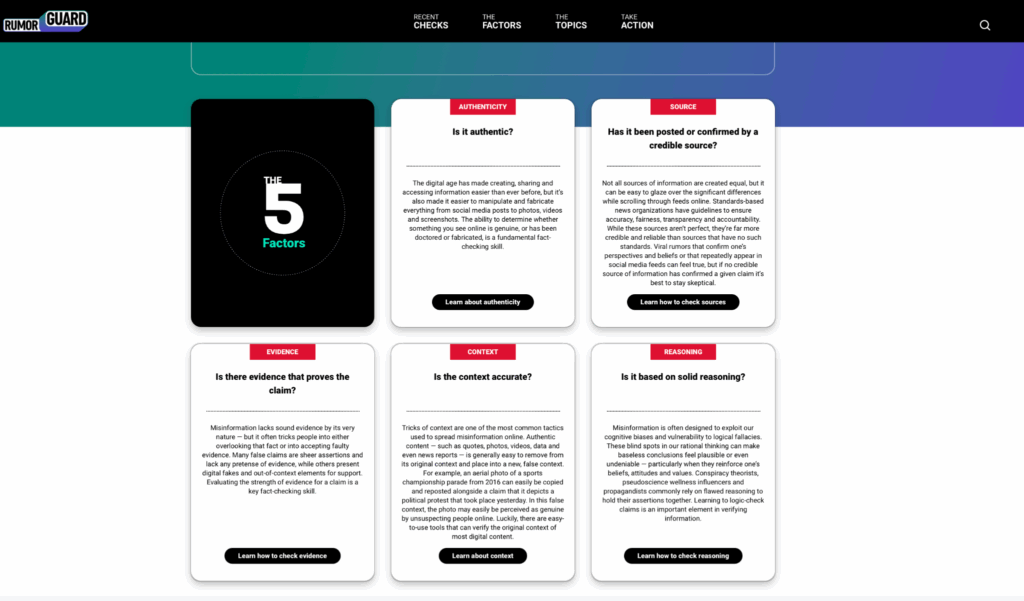
    RumorGuard shares these “5 Factors” to protect from misinformation, factors that I utilized during my interactive lesson.

    Bad News:

    In the interactive game, “Bad News”, the player’s goal is to gain as many social media followers as possible, through any means possible. The figure that you interact with during the game takes on a devil on the shoulder type of role, egging you on and encouraging you to engage in online behavior from posting fake news, to trolling specific accounts, to preying on people’s emotions in order to get a response. As you go through the stages, you choose between different goals: Impersonating a public figure or impersonating a credible news source? Do you want to create an article or a meme? I was able to choose from stories to use as conspiracy theories like vaccines and virus breakouts or mysterious plane crashes and what they mean. It was interesting to be on the side of producing misinformation and how easy it is to do. This role relies on bots and algorithms that create an echo chamber of information for users. It’s concerning how easy it is to exploit online behaviors, and how dangerous it is to have confirmation bias constantly reinforced. While media literacy tools help to avoid being victim to misinformation, this activity also made me question the general system of social media. An article by The National Academy of Sciences of The United States of America talked about an intriguing concept of a reversed algorithm where we interact with “feed[s] that deliberately puts contradictory news in front of us”(Vol. 114, No. 48). Acting as the internet troll in this lesson made it clear that today’s social media code is the perfect breeding ground for misinformation.

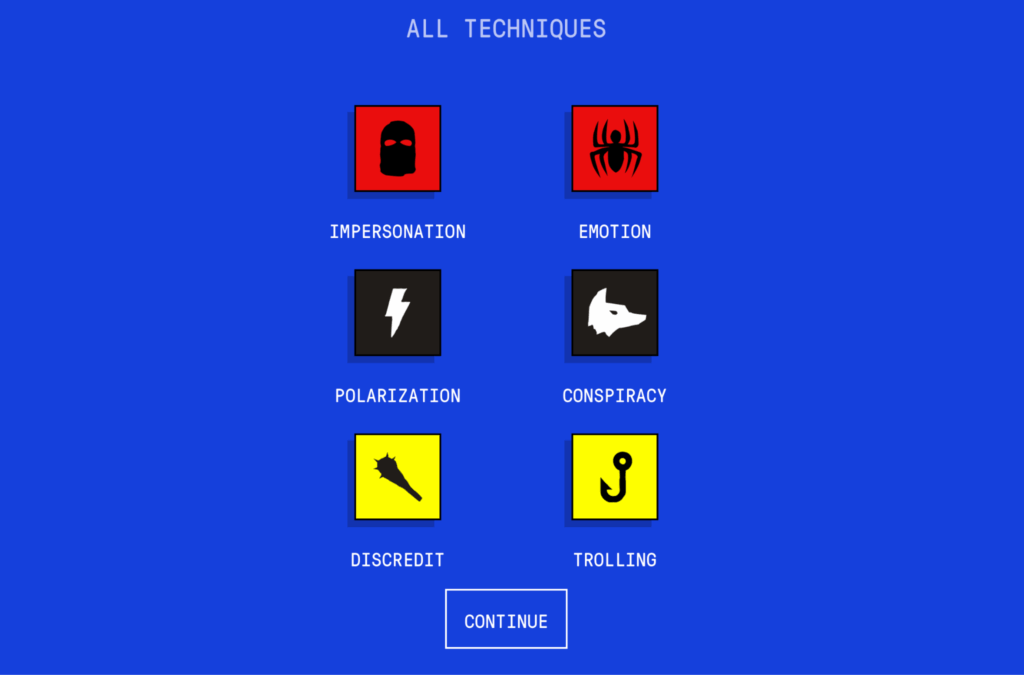
    As you continue through the game you don’t simply gain followers but also gain the technique for creating viral misinformation:

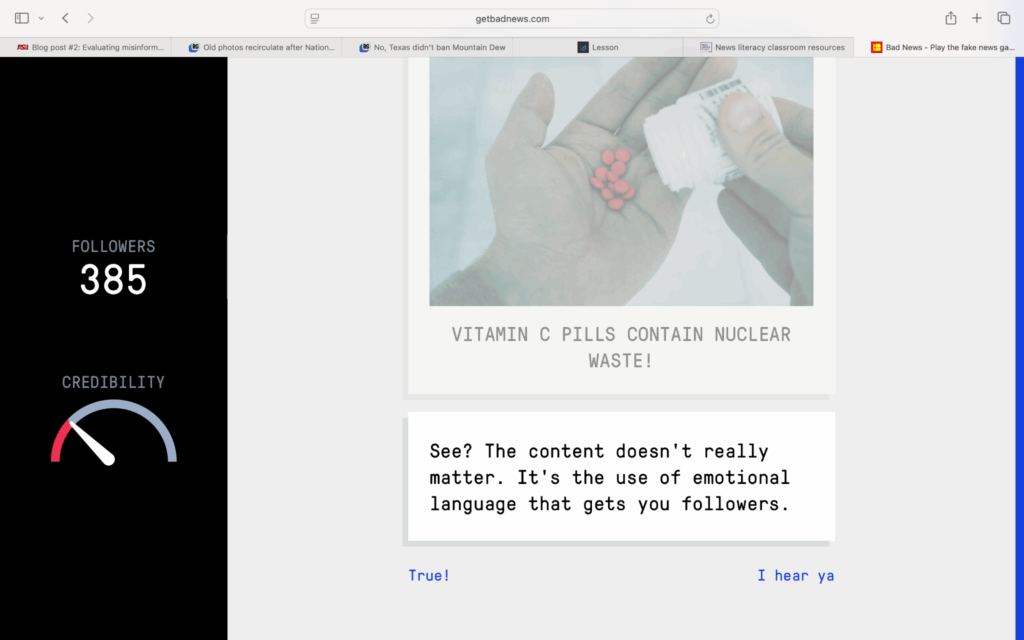
    During one stage, I was learning how to play on a person’s emotions. It was intriguing how a certain level of exploitation gave me more followers, comments, and interactions. However, if my tweets were too extreme I would lose followers and be considered a “lunatic”. It was interesting to see how easy it is to manipulate current events into believable conspiracy theories. People love to interact with clickbait, without admitting that that is what it really is. Misinformation takes advantage of how people interact online, an article by MIT Sloan School of Management states that, “In a social media environment, there’s so much to focus on around the social aspects of sharing — how many likes will I get, who else shared this — and we have limited cognitive bandwidth”. Through excess information, flashy headlines, and the need to fit in, people readily believe and encourage misinformation. The “Bad News” game was extremely educational on why misinformation is so successful. It preys on basic human behaviors, from confirmation bias to mob mentality.

    An interesting insight from Bad News:

    I

  • 24-Hour Media Diet: Spotting Misinformation

    Welcome to my 24-hour media diary for Friday August 29, 2025. This was a typical day for me, starting with a shift at Starbucks, working on assignments, and interacting with various forms of media. While I’m aware that I interface with social media, advertisements, news, and the radio on a daily basis, Friday, I was particularly astute to the fact that much of this content might have been lacking in credibility. This led me to lots of fact checking and even more interface with different forms of media.

    8:00 am – Instagram

    Starting out my morning with my usual scrolling, I checked Instagram to see what I missed while sleeping. The majority of posts are the usual from friends and family or memes but one story stood out to me. It was a screenshot of a tweet by President Trump praising the restaurant chain, Cracker Barrel, for returning to their original logo (the company recently removed Uncle Herschel from their logo design). The Instagram story didn’t link the post or provide much other information.

    This sent me down a rabbit hole, confused why the President was providing commentary on a restaurant’s logo. Upon more online inspection, it turns out the simplified design sparked criticism from both the President and many people online. Claims were made that the change in design lost the “good old fashioned American” image that the brand promotes. With this backlash Cracker Barrel returned to their original logo.

    8:30am – The Guardian and The New York Times 

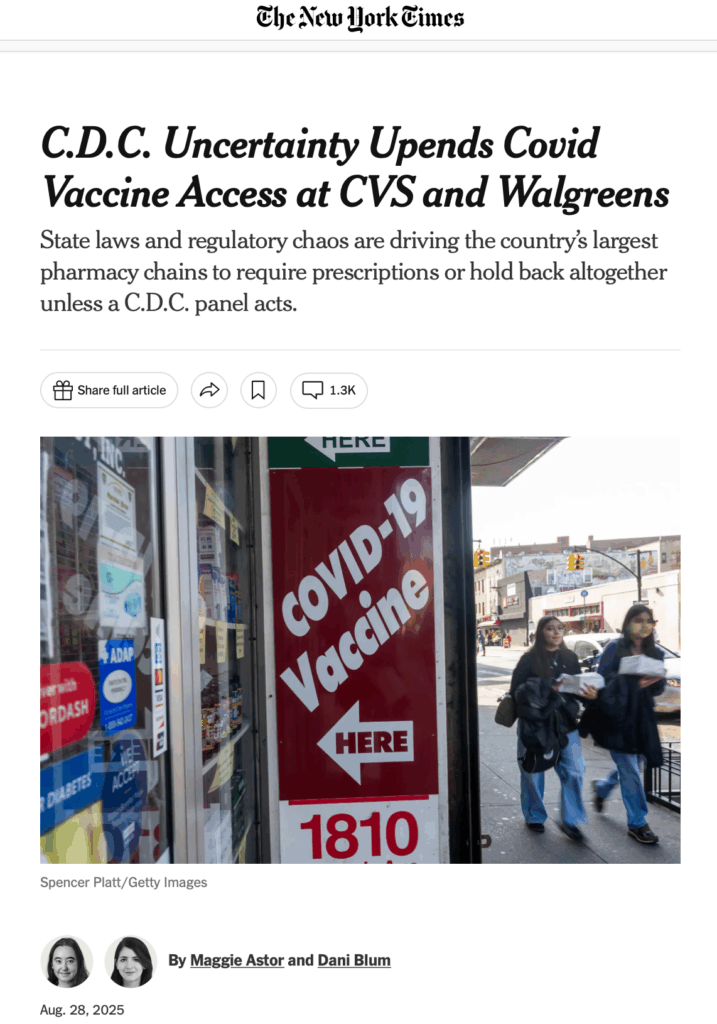
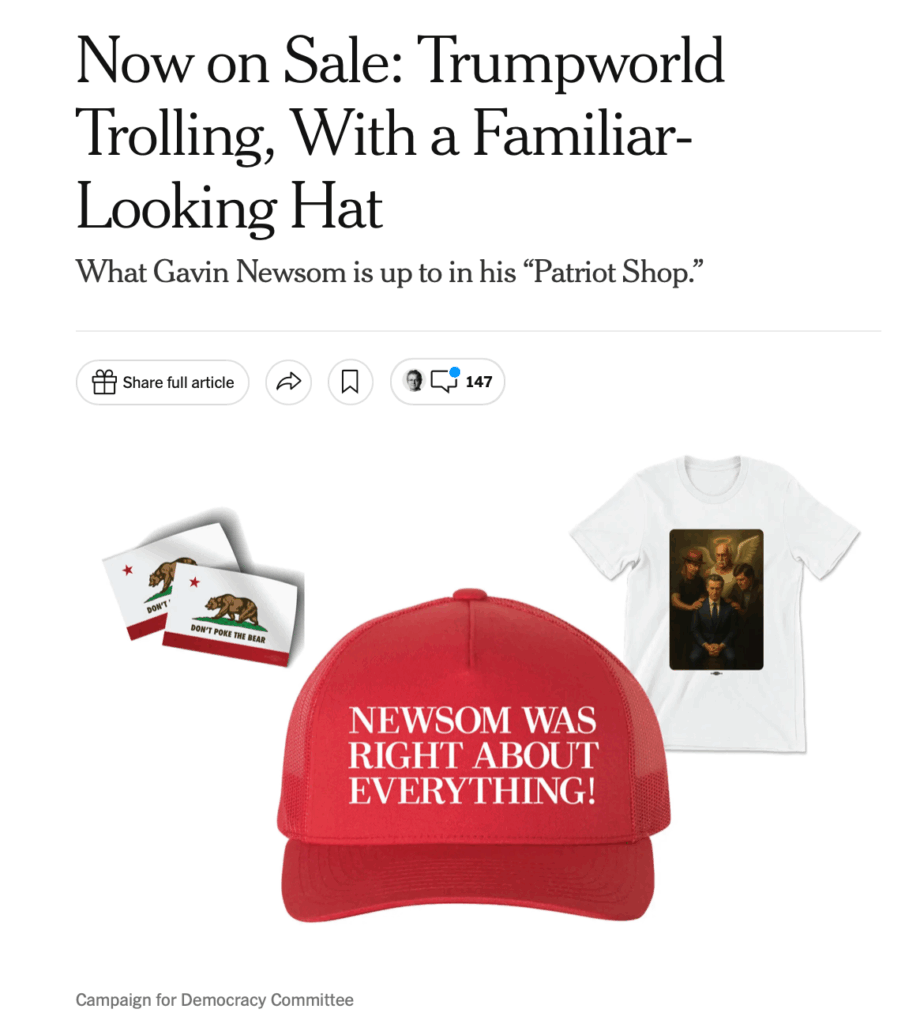
    I scroll through news outlets that I’m subscribed to. I see many headlines from The New York Times that catch my eye but I don’t fully read:

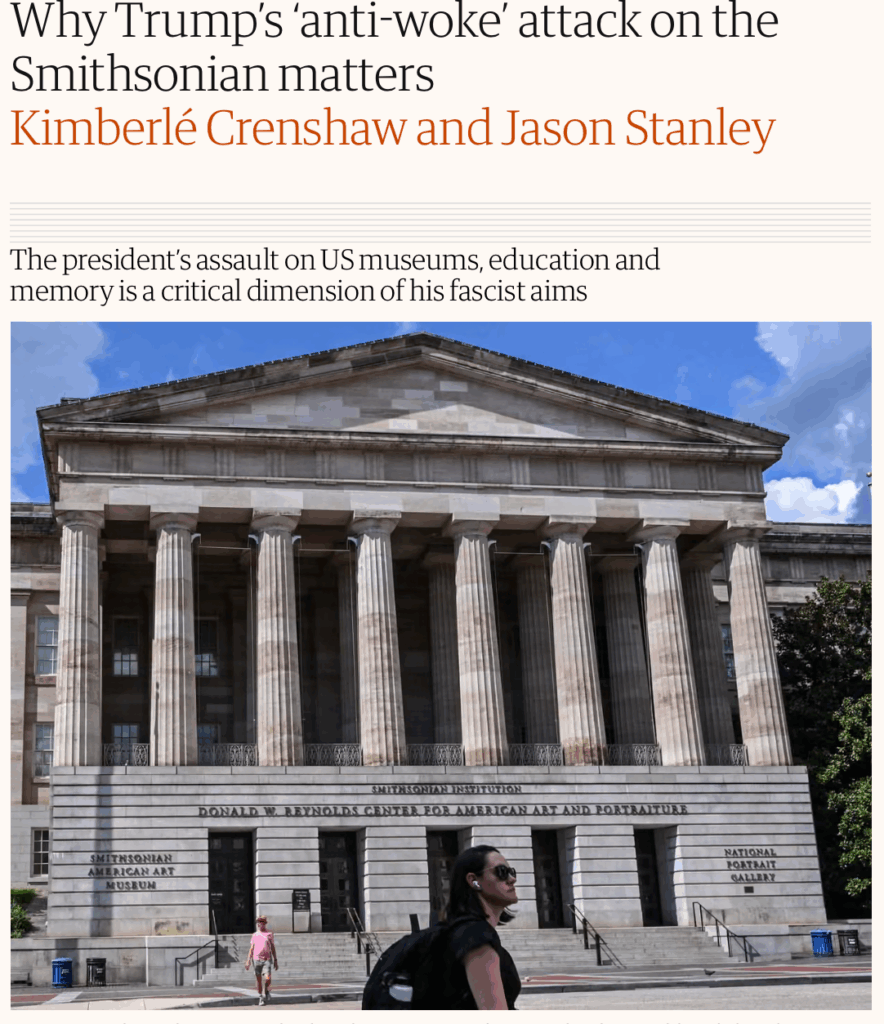
    I read this Guardian article about Trump trying to reshape American culture by supervising what is on display in the Smithsonian museums.

    It was clearly written from a left leaning perspective so I decided to look into the plan for “Restoring Truth and Sanity to American History”. Turns out, The President’s concern on how a logo can influence the American image is just the tip of the iceberg.

    10:00am – 6:00pm – TikTok and Emails

    The majority of my day was spent at Starbucks where I work as a barista. While there’s not a whole lot of time to be online, I find myself scrolling through TikTok on my breaks. A majority of the content is pop culture and lifestyle. I saw a lot about Taylor Swift’s recent engagement to Travis Kelce. With a simple check of the pop star’s Instagram, I can tell the news is true. I also give my emails a browse and see announcements from my professors and classes. 

    7:00pm – Canvas and ChatGBT

    After work I open up Canvas to start on my assignments. Today’s main project was for my Race, Politics, and Sexuality course. I learned to use an AI assistant tool created by an ASU doctoral student that helps to understand bias in news headlines. Using the AI tool and the SCAMPER method I learned how to think critically about the way language and emotion can be used to skew perspectives. I tend to take a negative stance on AI and avoid using it, however utilising it in an academic way showed that sometimes it can help to understand what is credible and what is not.

    9:00pm – Instagram

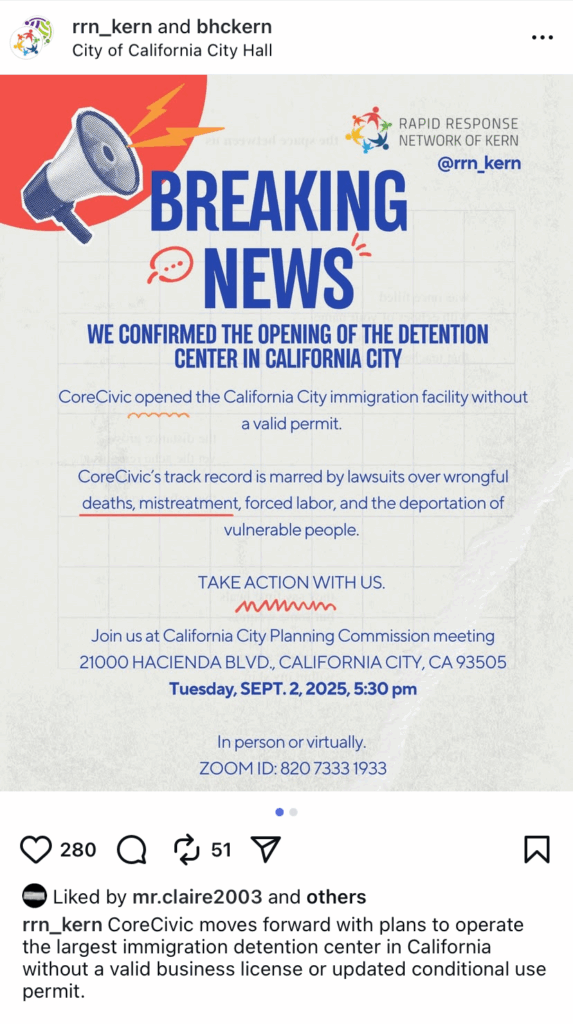
    As I settle down for the evening, I return to doom scrolling through Instagram. Another story post catches my attention. It’s a post by an activist account claiming that a private immigration detention center was opened illegally in Kern County, California. 

    Living a couple hours away in Los Angeles, I was surprised I hadn’t caught wind of this previously. The post made very explicit claims without much evidence. Upon further inspection, an article by Visa Verge revealed that while in 2019 California law was passed preventing private companies from opening detention centers, the law did not prevent them from Federal use. While morally this brings up many issues, technically the detention center was opened while still abiding by the law.

    Reflection:

    Looking at my media diet laid out like this, it’s clear that I interact with a multitude of different forms of media everyday. TikTok and Instagram provide the most consistent flow of information to me. However it’s clear that bias and one sided views are common as a result of algorithms and echo chambers. It’s easy for me to fall victim to clickbait and flashy headlines. This project encouraged me to not simply accept the information that is being fed by me and to intentionally fact check my content. When it comes to social media I’m far more wary on what to believe. Whether its a post by the President or a post by a small activist group, the fact that I see it on Instagram automatically makes me question the content.  I tend to lean towards more reputable names like The Guardian or The New York Times as a source of credibility. However, even these sources have their own agendas and perspectives. This activity has taught me that it’s helpful to approach all forms of media with a critical lens, questioning information is a sure way to understand multiple perspectives.